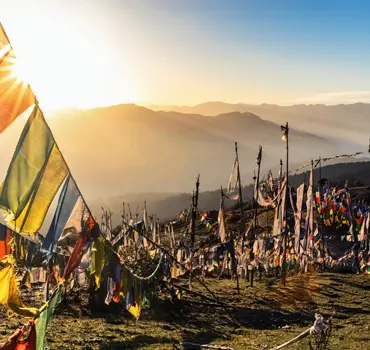
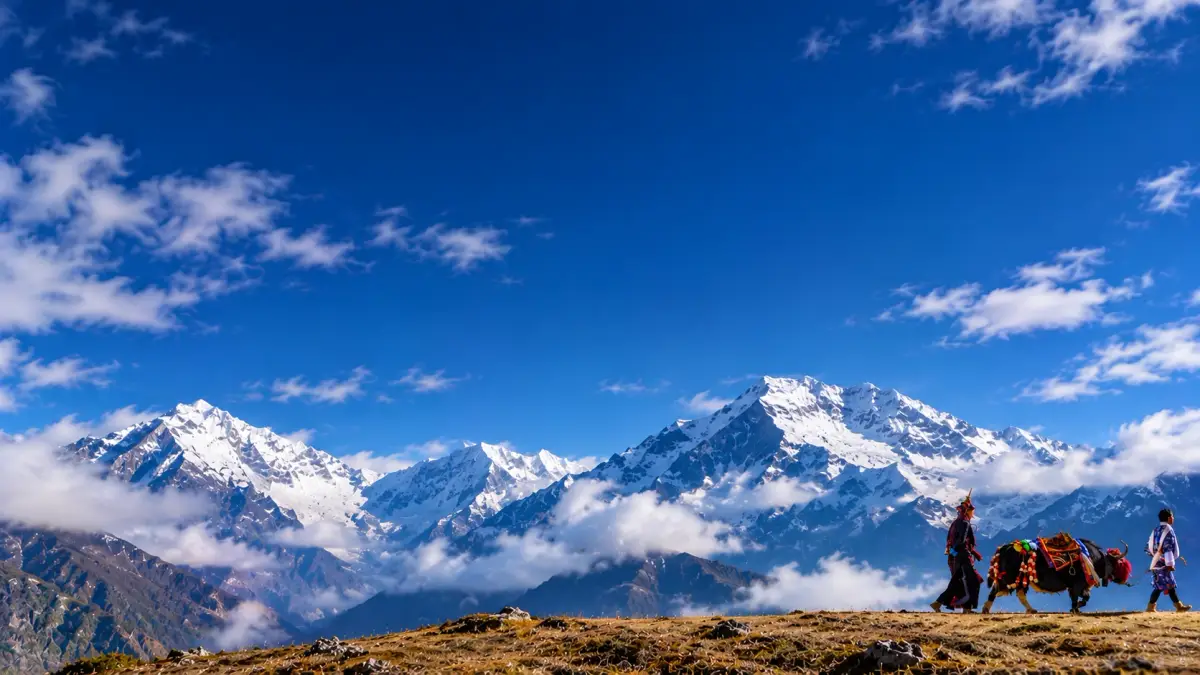
Magical monasteries, snowy Himalayan mountains, colourful prayer flags and peaceful green valleys! Planning a trip to the Land of the Thunder Dragon? Here are 11 helpful answers to make your Bhutan adventure even better.
1. When is the best time to visit Bhutan?
- March to May: beautiful flowers, pleasant weather and traditional festivals.
- June to August: green landscapes, monsoon rains and fewer visitors.
- September to November: clear mountain views, lovely weather and colourful festivals.
- December to February: cold nights, fewer crowds and beautiful Himalayan scenery.
April, October and November are wonderful months for sightseeing and hiking. Winter is also a fantastic time to see the rare black-necked cranes in the Phobjikha Valley.
Remember that temperatures can change dramatically between valleys and mountain passes. See our full guide to the best time to visit.
2. Why is Bhutan so expensive to visit?
Bhutan charges visitors a Sustainable Development Fee (SDF) to support education, healthcare, local communities and nature conservation.
Current standard fees:
- Adults: US$100 per night
- Children aged 6 to 11: US$50 per night
- Children under 6: free
Good news! In November 2026, Bhutan announced that the reduced US$100 rate would continue until 31 December 2029.
Visitors entering Bhutan through the designated southern border towns are exempt from the SDF for 24 hours, as long as they stay within the border-town zone.
Indian citizens pay a lower rate of INR 1,200 per night. A special rate of US$15 per night applies to eligible Bangladeshi visitors.
Remember that the SDF does not include your hotel, meals, guide, transport or attraction tickets. Always ask for a complete price breakdown before booking your trip.
3. Do I need a visa and a tour guide to visit Bhutan?
Most international travellers need a visa before arriving. The standard visa application fee is US$40, separate from the daily tourism fee. You can apply online at the official website, bhutan.travel/visa, or ask your tour operator to arrange everything.
Indian citizens need an entry permit instead of a visa. Visitors from Bangladesh and the Maldives have different application options.
Important: Bhutan requires tourists to travel with a certified local guide. However, you don't have to join a large group tour — you can arrange a private guide, driver and your own personalised itinerary. Accommodation must also be approved by Bhutan's Department of Tourism.
Compare several licensed tour operators before booking. Read more in our visa guide.
4. How many days do I need in Bhutan?
Seven to ten days is a wonderful choice for a first visit. Here's a simple nine-night itinerary:
- Thimphu: 2 nights
- Punakha: 2 nights
- Phobjikha Valley: 1 night
- Haa Valley: 1 night
- Paro: 3 nights
If you have two weeks, consider adding Bumthang and the Trongsa valley.
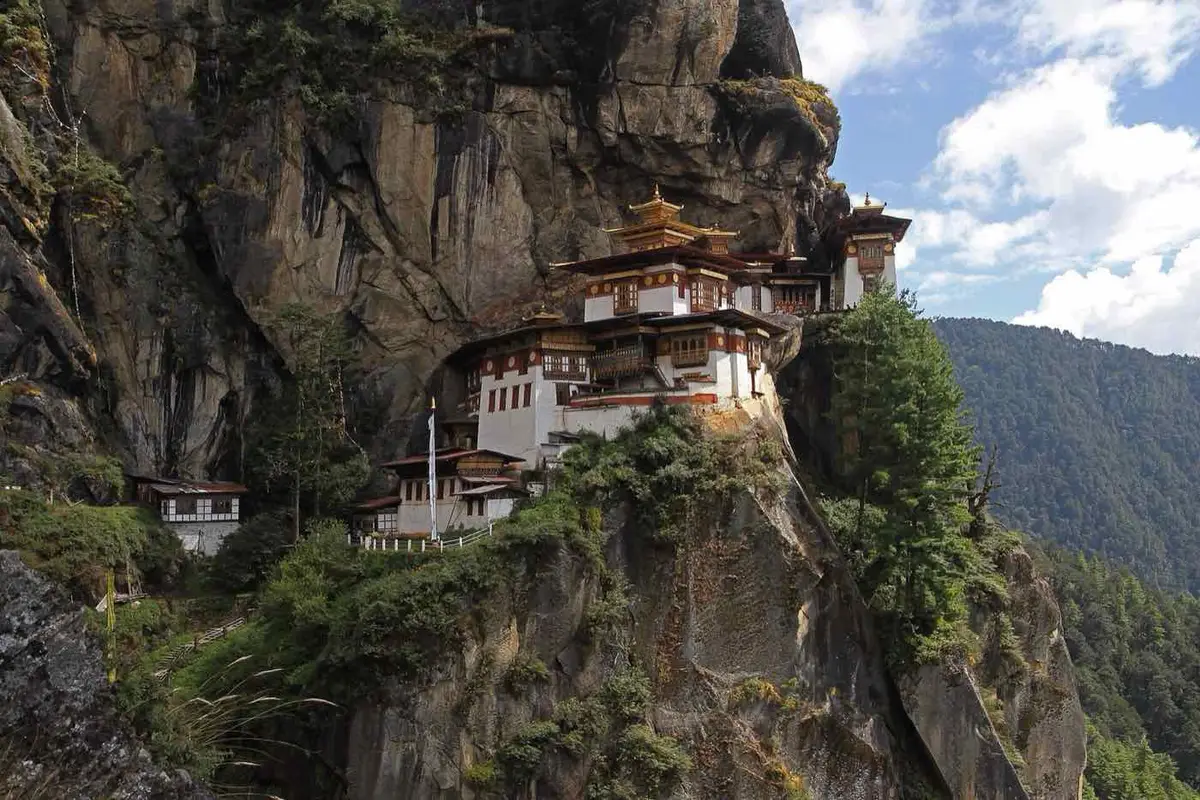
Save the iconic Tiger's Nest hike for near the end of your trip. This gives your body time to adjust to the altitude.
Bhutan's mountain roads are winding, and short distances can take several hours to travel — don't try to explore the entire country in one week! Browse our ready-made journeys.
5. What are the best places to visit in Bhutan?
- Paro: Tiger's Nest Monastery, traditional buildings and beautiful mountain scenery.
- Thimphu: Bhutan's capital, with markets, museums and the giant Buddha statue.
- Punakha: a spectacular fortress beside two rivers.
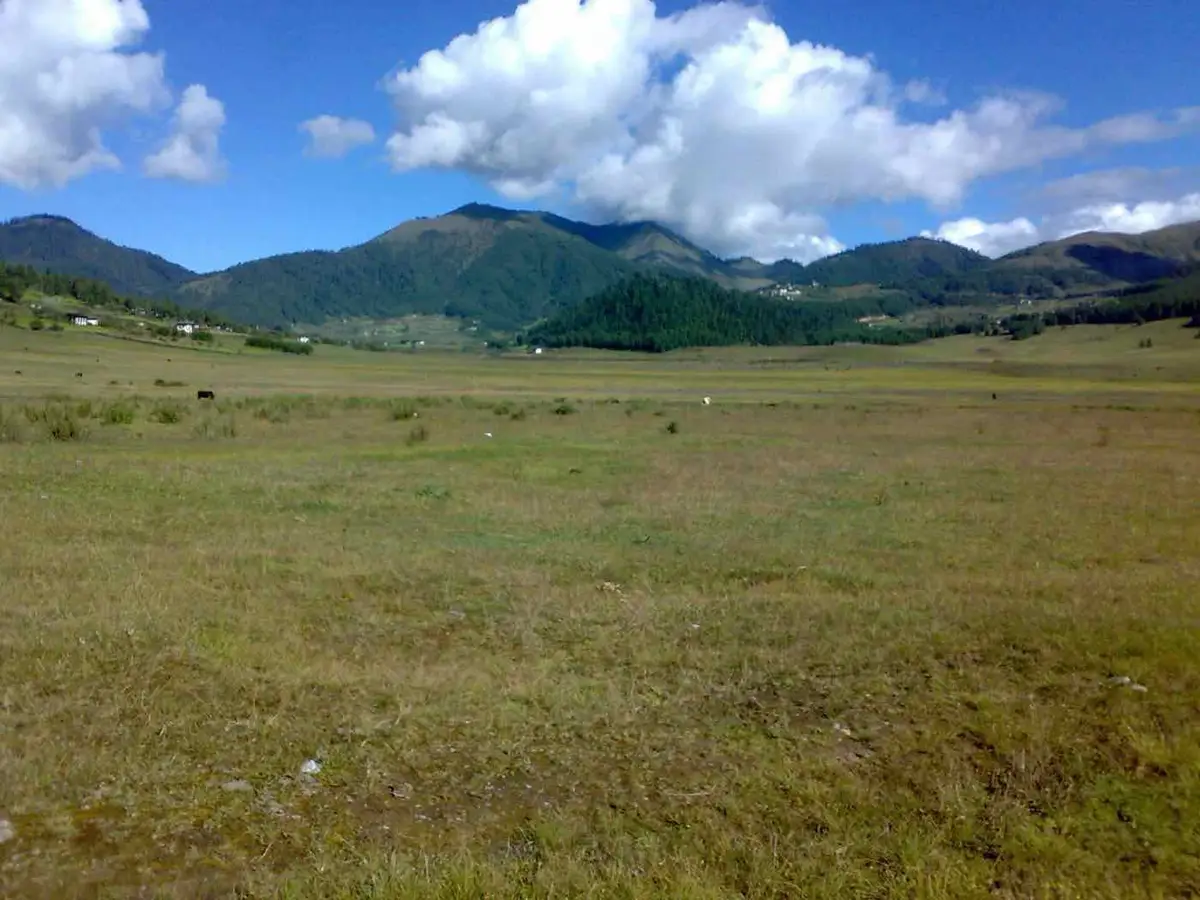
- Phobjikha Valley: peaceful countryside, nature walks and rare cranes.
- Bumthang: sacred temples, traditional villages and lovely mountain valleys.
- Haa Valley: quiet villages and incredible scenery.
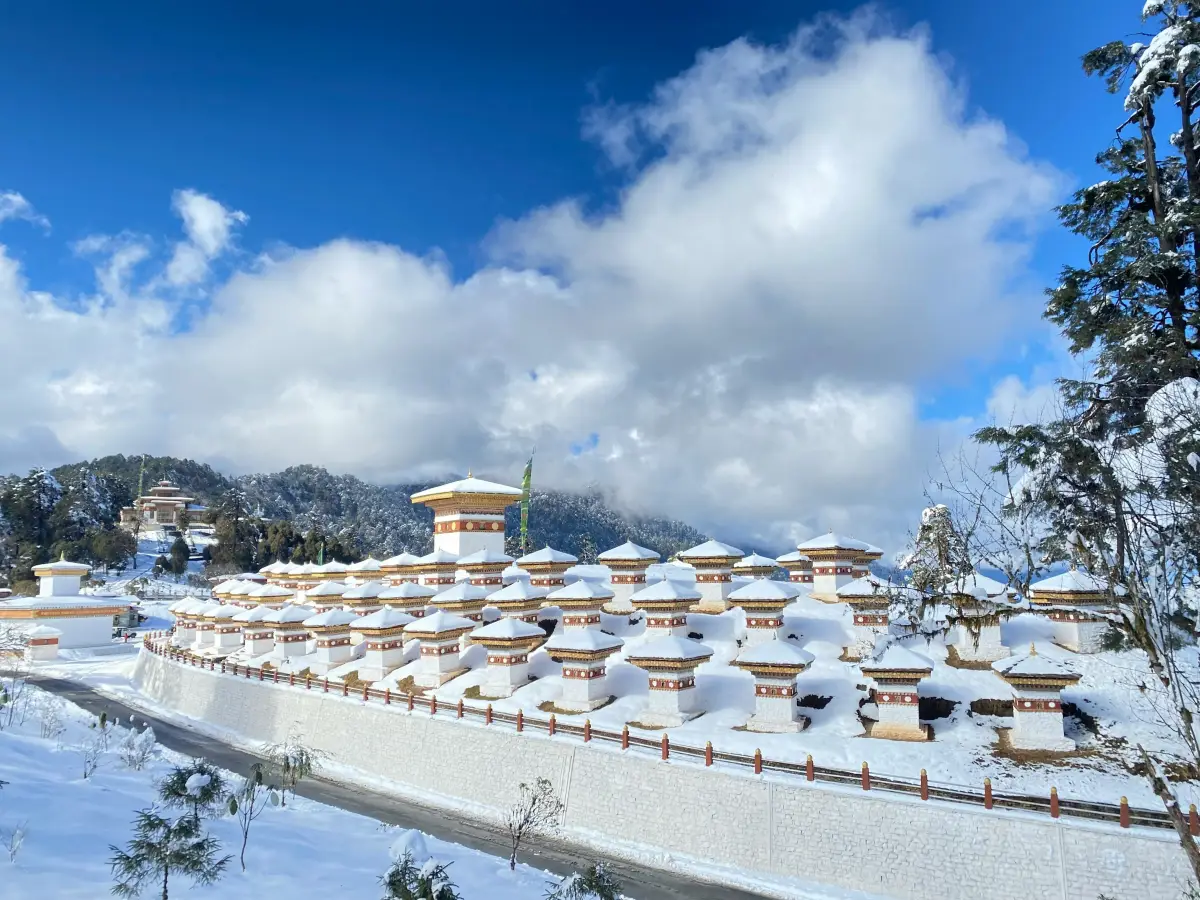
- Dochula Pass: 108 memorial stupas and beautiful Himalayan views.
- Trongsa: an impressive historic fortress.
- Chele La Pass (3,988 m): one of Bhutan's highest motorable road passes, with breathtaking mountain views.
Don't miss Punakha Dzong! This beautiful fortress is one of Bhutan's most impressive monuments.
6. How do I get to Bhutan, and can I rent a car?
Most international travellers fly into Paro International Airport. Bhutan's two airlines are Drukair, the national airline, and Bhutan Airlines, a private airline.
Popular connecting cities include:
- Bangkok, Thailand
- Kathmandu, Nepal
- New Delhi, India
- Kolkata, India
- Singapore
- Dhaka, Bangladesh
Bhutan can also be entered by road from India through designated border crossings.
If you're flying from Kathmandu or Delhi to Paro, try to book a window seat on the left side of the plane for a chance to enjoy spectacular Himalayan views.
Self-drive rental cars are not available in Bhutan. Most visitors travel with a private driver and guide. Bring motion-sickness medication if you struggle with winding mountain roads, and allow extra time between connecting flights, as mountain weather can cause delays. More in our flights guide.
7. How difficult is the Tiger's Nest Monastery hike?
Tiger's Nest, also called Paro Taktsang, is Bhutan's most famous attraction. The monastery sits on a cliff at around 3,120 metres (10,240 feet) above sea level. Allow around four to six hours for the hike, monastery visit and return journey.
Some helpful tips:
- Start early in the morning.
- Spend a few days adjusting to the altitude first.
- Wear hiking shoes with good grip.
- Carry enough drinking water.
- Pack snacks and warm layers.
- Walk slowly and take regular breaks.
- Consider using walking poles.
Ponies can carry visitors part of the way uphill, but you'll still need to walk the final section, which includes many stairs. If you experience dizziness, nausea or a worsening headache, stop and tell your guide.
The hike is challenging, but the views are incredible! See our Tiger's Nest hike guide.
8. What are the best cultural experiences in Bhutan?
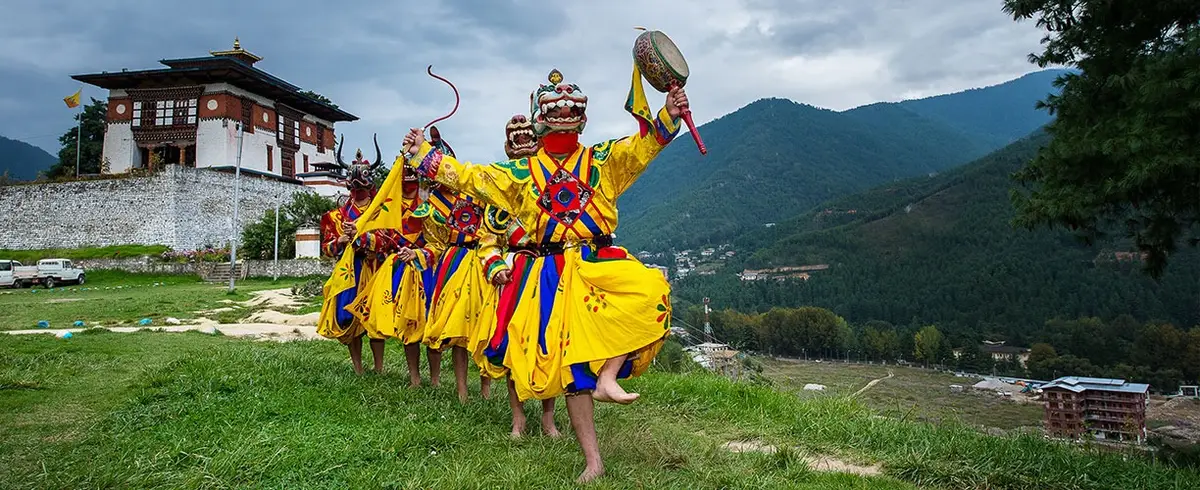
- Watch traditional masked dances at a Tshechu festival.
- Visit a Buddhist monastery.
- Stay in an approved traditional farmhouse.
- Include a monastery stay and a Buddhist philosophy talk if you are interested.
- Enjoy a traditional hot stone bath.
- Watch an archery competition.
- Try wearing Bhutan's traditional clothing.
- Learn how local textiles are made.
- Enjoy a traditional Bhutanese cooking class.
- Explore local farmers' markets.
- Watch the black-necked cranes in the Phobjikha Valley during winter.
Popular festivals include:
- Paro Tshechu: usually held in spring.
- Thimphu Tshechu: usually held in autumn.
- Punakha Tshechu: usually held in late winter or early spring.
- Black-Necked Crane Festival: traditionally held on 11 November.
- Gangtey Tshechu: usually held in autumn.
- Druk Wangyel Tshechu: traditionally held on 13 December at Dochula Pass (3,100 m).
- Laya Highland Festival: usually held in autumn.
Festival dates can change according to the Buddhist calendar, so check before booking your flights. See our festival guide.
9. Adventure and nature
- Ride Bhutan's roads: Bhutan offers some of the most scenic and thrilling biking routes in South Asia.
- River rafting in the Punakha Valley.
- Bird watching: Bhutan has some of the best birding in South Asia.
- Trekking: some of the best trekking routes in the Himalaya, from 2 to 28 days.
- Photography and fly fishing.
Explore our popular treks and special-interest journeys.
10. What food should I try in Bhutan, and do I need cash?
Bhutanese food is famous for its love of chilli peppers and cheese!
- Ema datshi: Bhutan's national dish, made with chilli peppers and cheese.
- Kewa datshi: potatoes cooked with cheese.
- Shamu datshi: mushrooms cooked with cheese.
- Momos: delicious steamed dumplings.
- Phaksha paa: pork cooked with chilli peppers.
- Red rice: a popular local rice with a slightly nutty flavour.
- Jasha maru: spicy chicken stew.
- Khurle: traditional buckwheat pancakes.
- Suja: traditional butter tea.
- Hoentay: buckwheat dumplings with tasty fillings.
Not a fan of spicy food? Ask your guide or restaurant for milder dishes.
The local currency is the Bhutanese ngultrum (BTN). Indian rupees are also widely accepted. Credit cards are useful at larger hotels and businesses, but carry cash for smaller shops, markets and remote villages.
Ask your tour operator whether meals, entrance fees and guide tips are included in your package.
11. What common mistakes should I avoid in Bhutan?
- Forgetting to include the daily tourism fee in your budget.
- Booking the cheapest tour without checking what's included.
- Attempting the Tiger's Nest hike immediately after arriving.
- Underestimating mountain driving times.
- Wearing shorts or sleeveless clothing inside temples.
- Taking photographs inside sacred buildings without permission.
- Touching religious objects or disturbing people who are praying.
- Assuming credit cards are accepted everywhere.
- Bringing a drone without checking local restrictions.
- Ignoring symptoms of altitude sickness.
Bonus tips
- Pack warm layers, even during spring and summer.
- Bring sunscreen, sunglasses and lip balm.
- Drink bottled or properly treated water.
- Remove your shoes and hat where required at religious sites.
- Walk clockwise around Buddhist stupas.
- Buy travel insurance with medical evacuation cover — and make sure it covers the altitude of your planned hikes.
- Ask permission before photographing local people.
- Avoid touching stray dogs.
- Leave extra time for unexpected weather delays.
Two friendly Bhutanese phrases
- Kuzu zangpo la — Hello.
- Kadrin chey la — Thank you.
Bhutan is a wonderful place to slow down, enjoy nature, discover Buddhist traditions and experience a different way of life.
Already visited Bhutan? Which monastery, mountain valley or cultural experience changed your view of Bhutan? Tell us on Facebook or Instagram.