Packing for Bhutan is a little like packing for three trips at once. In a single day you might wander a subtropical valley in Punakha, cross a mountain pass well above 3,000 m, and then step into a temple where shoulders and knees must be covered. The weather can swing from warm sunshine to cold drizzle in an hour. The good news is that a few well-chosen layers handle almost everything. Here is what we suggest to our guests, season by season, along with the small things people most often forget.
The golden rule: layers
Altitude shapes Bhutan's climate more than the calendar does. Punakha sits at around 1,200 m and stays mild even in winter, while Bumthang and the high passes can be cold in any month. Mornings and evenings are cool almost everywhere, and many hotels and farmhouses rely on heaters rather than central heating.
Rather than bringing heavy items, build a system you can add to and peel away:
- Base layer: a few breathable T-shirts or long-sleeved tops, plus thermal leggings and a thermal top from autumn to spring.
- Mid layer: a fleece or light wool jumper.
- Insulation: a packable down or synthetic jacket.
- Outer layer: a waterproof, windproof shell jacket.
- Extras: a warm hat, light gloves and a scarf or buff.
Season by season
Spring (March to May)
Spring brings rhododendrons, festivals and comfortable walking weather. Days are pleasantly warm in the valleys, but nights are cool and the passes can still be cold, especially in March. Pack light layers for daytime, a fleece and warm jacket for evenings, and a rain jacket, as showers become more frequent towards May.
Summer (June to August)
This is the monsoon season. The landscape is at its greenest and the valleys are warm, but rain is frequent and sometimes heavy. Bring a good waterproof jacket, quick-drying clothing, a small umbrella and footwear that copes with wet ground. A pair of sandals for evenings is welcome. If you are walking in forests, long socks help with leeches.
Autumn (September to November)
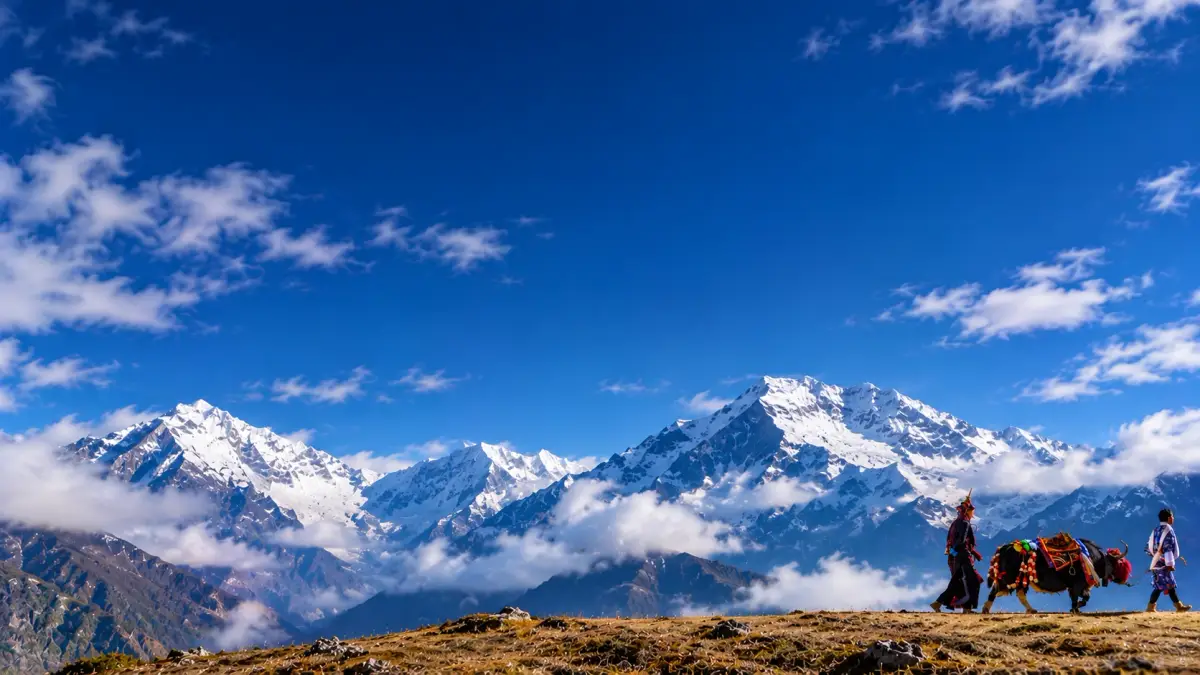
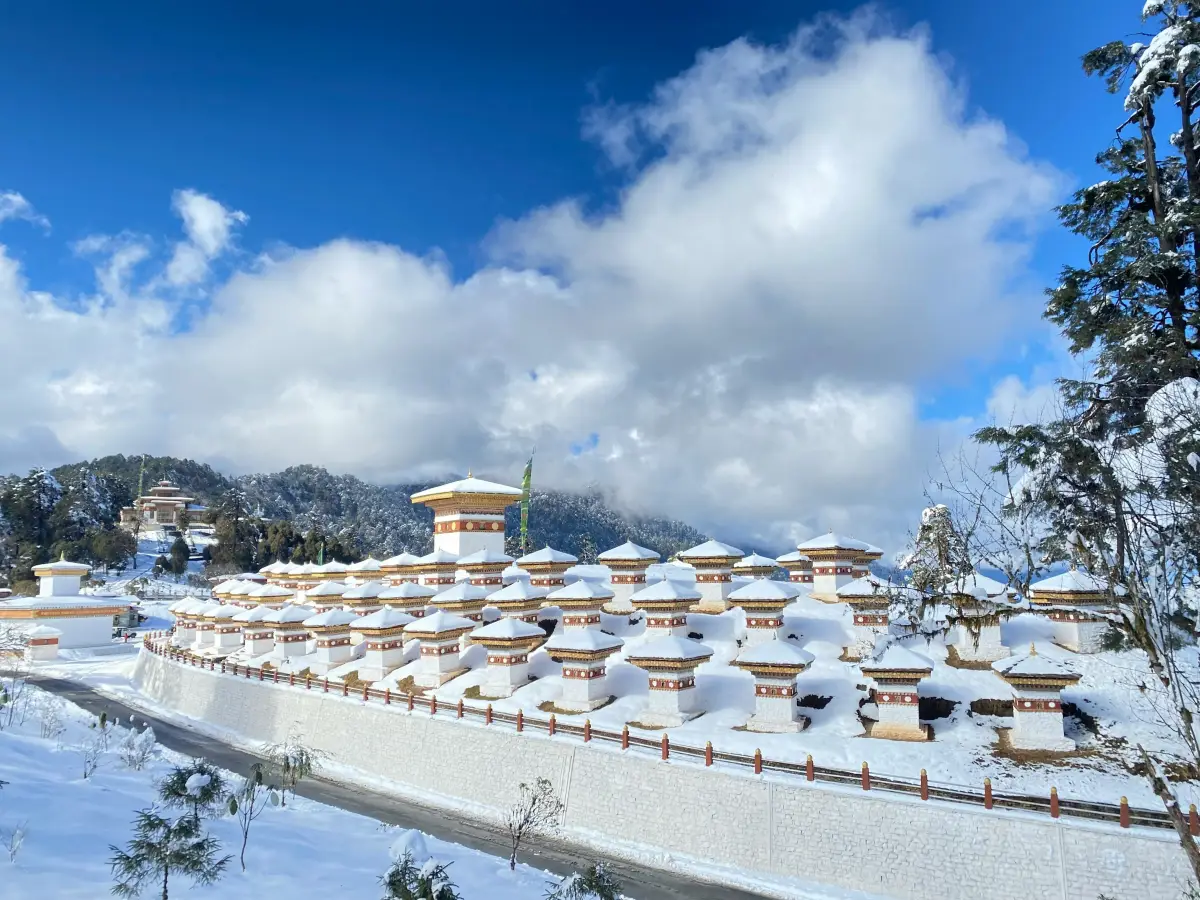
Autumn is the most popular season, with clear skies and wide mountain views. Days are often warm and sunny, but evenings turn crisp, particularly from late October. Pack for both: light layers for walking, and a warm jacket, hat and gloves for mornings, evenings and high viewpoints such as Chele La or Dochula.
Winter (December to February)
Winter days are often bright and clear, but nights are cold, and in places such as Bumthang and Phobjikha temperatures drop well below freezing. Bring a proper down jacket, thermal layers, a warm hat, gloves and warm socks. The lower valleys of Punakha and Wangdue are much milder and make a pleasant contrast.
For a fuller picture of Bhutan's weather, see our guide to the best time to visit.
Dressing for temples and dzongs
You will visit many sacred places, and a respectful dress code applies at all of them. Bhutanese visitors wear national dress and a ceremonial scarf; visitors are simply asked to dress modestly.
- Cover your shoulders and arms: long sleeves or a shirt with sleeves, not a vest top.
- Wear long trousers, or a skirt or dress below the knee.
- Avoid shorts, very tight clothing, short skirts and caps or hats inside.
- Bring shoes that slip on and off easily, as some temples ask you to remove them.
Simple trick: keep a light, collared long-sleeved shirt in your daypack. Slip it on before a temple visit, and take it off again for the walk afterwards.
Hiking and walking gear
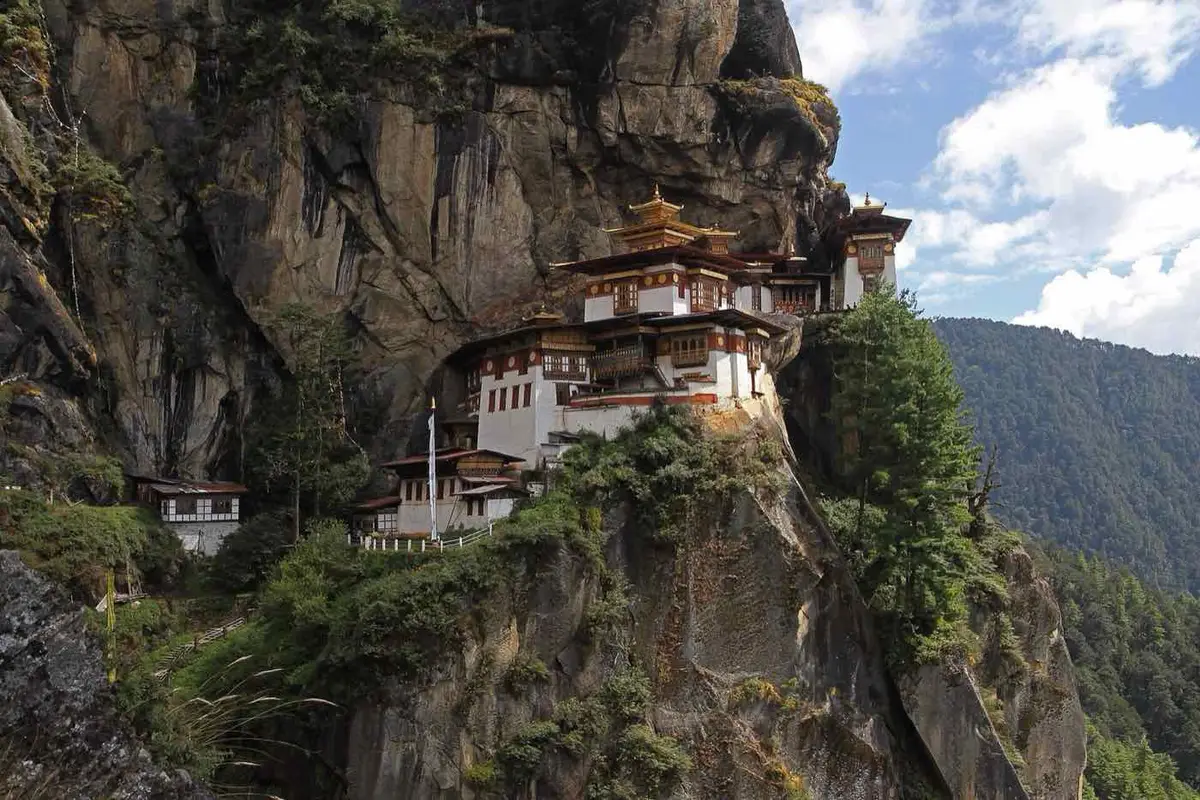
Even if you are not trekking, you will probably walk more than you expect. The hike to Tiger's Nest alone involves a long climb and many steps. For day hikes, pack:
- Comfortable walking shoes or light hiking boots with good grip, already broken in.
- A daypack of 20 to 30 litres for water, layers and snacks.
- A reusable water bottle. Ask your guide where to refill with safe drinking water.
- Walking poles, especially helpful on descents.
- A small head torch for early starts and farmhouse stays.
If you are joining a multi-day trek, you will need more specialist kit, including a warm sleeping bag. Your operator will send a trek-specific list. Read our Tiger's Nest hike guide for what to expect on Bhutan's most famous walk.
Altitude and sun protection
At altitude the sun is strong, even on cool or cloudy days. It is easy to burn while feeling cold.
- Sunscreen with a high protection factor.
- Sunglasses with good UV protection.
- Lip balm with SPF; the dry mountain air is hard on lips.
- A sun hat for walking.
- Moisturiser, as the air can be very dry, especially in winter.
Medicines and first aid
Pharmacies exist in the larger towns, but brands may be unfamiliar and remote areas have none. Bring what you need, in original packaging, with a copy of any prescription.
- Your regular prescription medicines, with enough to spare for delays.
- Pain relief and something for headaches.
- Rehydration salts and an anti-diarrhoea remedy.
- Motion sickness tablets, as Bhutan's mountain roads are long and winding.
- Plasters, blister dressings and antiseptic.
- Any altitude medication your doctor recommends; ask for advice before you travel.
Make sure your travel insurance covers medical treatment, evacuation and the altitudes you plan to reach. Our insurance guide explains what to look for.
Electronics, plugs and power
Bhutan runs on 230 volts at 50 hertz. You will find a mix of socket types: the round three-pin Type D is the most common, and you will also see Type G (the British-style three square pins) and sockets that accept the two round pins of Type C. The simplest answer is a universal adapter that covers D, G and C.
Most phone and laptop chargers are dual voltage, but check anything else before plugging in. Power cuts are occasional, so a small power bank is useful, as are spare camera batteries, since cold weather drains them quickly.
Money and documents
The currency is the Bhutanese ngultrum (BTN), which is pegged to the Indian rupee. There are ATMs in the main towns, and larger hotels and shops accept cards, but smaller shops, markets and villages usually need cash.
- Bring some cash for tips, handicrafts and small purchases.
- If you bring foreign currency to exchange, carry clean, undamaged notes.
- Keep printed or digital copies of your passport, visa clearance and insurance.
Remember that the Sustainable Development Fee of US$100 per night for adults is normally paid as part of your visa and tour arrangements, not in cash on arrival.
What not to bring
A few items are restricted or simply unnecessary in Bhutan.
- Drones: do not bring one. Flying a drone requires permission from the Bhutan Civil Aviation Authority, which is very rarely granted to visitors, and drones can be held at customs.
- Tobacco: visitors may bring a limited amount for personal use, but it must be declared on arrival and duty paid. Keep your receipt, as you may be asked to show it. Smoking is restricted to designated areas.
- Plastic bags: single-use plastic bags are banned. Bring a reusable shopping bag.
- Revealing clothing: it will spend the trip in your suitcase.
- Too much luggage: domestic flights and some vehicles have limited space. One medium bag and a daypack is ideal.
Rules change from time to time, so check the latest customs guidance before you travel.
Planning tips
- Pack light and layer up. You can have laundry done at most hotels.
- Keep essentials in your hand luggage, including medicines and a warm layer, in case of delays.
- Buy locally if you forget something. Thimphu and Paro have shops selling basic outdoor gear and warm clothing.
- Leave room for textiles. Bhutanese weaving is beautiful, and many guests go home with more than they planned.
Pack thoughtfully, leave a little space in your bag, and Bhutan will take care of the rest. If you have a question about your own trip, our team in Thimphu is happy to help.