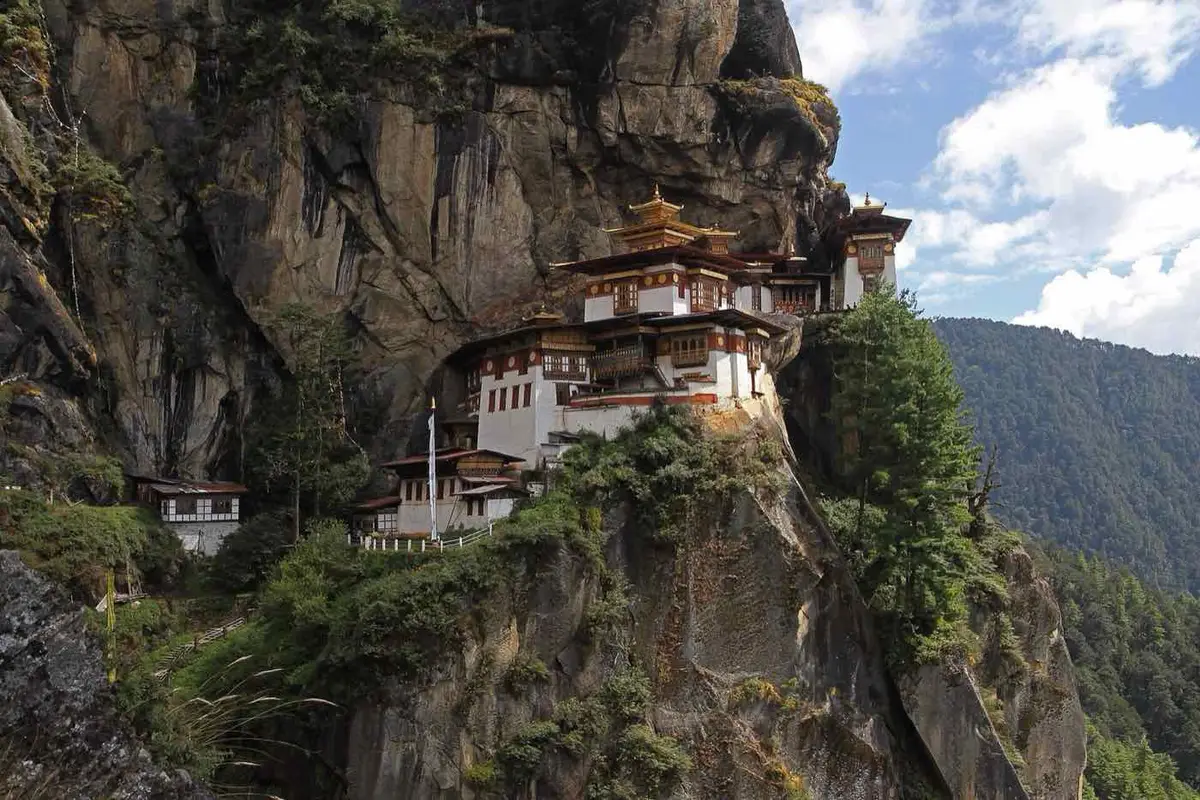
Every visitor to Bhutan knows the photograph: a cluster of white walls and golden roofs pinned to a sheer rock face, with pine forest falling away below and cloud drifting past the windows. Paro Taktsang, the Tiger's Nest, is the image of the kingdom. Yet for Bhutanese families it is far more than a view. It is one of the holiest places in the Himalaya, a site of pilgrimage tied to the arrival of Buddhism itself, and a climb that many Bhutanese hope to make at least once in their lives.
This guide tells the story behind the cliff, explains what you will find inside, and shares how to experience it well rather than simply tick it off.
The legend of Guru Rinpoche and the flying tigress
Bhutanese tradition holds that in the eighth century Guru Rinpoche, also known as Padmasambhava, the great tantric master who carried Buddhism across the Himalaya, flew to this cliff on the back of a tigress. In the most widely told version, the tigress was a form taken by his consort and disciple, Yeshe Tsogyal.
Here the Guru is said to have subdued a local demon that was obstructing the spread of the Dharma, then meditated in a cave in the rock for three years, three months, three weeks, three days and three hours. That cave, and the tigress who carried him, gave the place its name: Taktsang means "tiger's lair".
The cliff became a power place for meditation. Over the centuries, many revered masters came to practise in its caves, and the site is counted among the most important of the sacred places associated with Guru Rinpoche.
Why the story matters
For pilgrims, the legend is not decoration. Guru Rinpoche is regarded as a second Buddha in Bhutan, and the places he blessed are believed to hold that blessing still. When you see a grandmother pause on the trail to turn a prayer wheel, or a young monk prostrate at the threshold, you are watching that belief in action.
From hermitage to monastery
For centuries Taktsang was a place of hermits and caves rather than buildings. The temple complex we see today traces back to 1692, when Gyalse Tenzin Rabgye, the fourth temporal ruler (Desi) of Bhutan, ordered a temple built around the Guru's meditation cave. It was consecrated a couple of years later.
Building on a vertical cliff without roads or machinery was an astonishing feat. Timber, stone and earth were carried up by hand along mountain paths. The result was a series of small temples linked by stairways and narrow ledges, each perched where the rock allowed.
The 1998 fire and the rebuilding
On 19 April 1998, fire swept through the main buildings of the monastery. Much of the structure was lost, along with precious paintings, statues and religious objects. The likely cause was an electrical fault or butter lamps igniting hanging cloth, though the precise origin has never been settled beyond doubt.
The loss was felt across the country. Reconstruction began in the following years under royal patronage, with traditional craftsmen working to restore the temples to their original form. By 2005 the rebuilt Taktsang was complete, faithful to its historic design and once again filled with paintings and images.
A thought for the climb: the walls you see are around twenty years old, but the cave at their heart and the devotion that rebuilt them are many centuries older. Taktsang has always been renewed by the people who love it.
What you see inside
Visitors are welcome inside several of the temples, guided by a licensed Bhutanese guide. Photography is not permitted inside, so take your pictures from the viewpoints outside and then put the camera away.
The complex holds a number of shrine rooms, each with its own character:
- The cave of the Guru's meditation, kept behind a small door and not normally open to visitors. Its presence gives the whole site its meaning.
- Statues of Guru Rinpoche in his various forms, including the wrathful manifestation associated with this place.
- Wall paintings of Buddhist deities and masters, renewed after the fire in the classical style.
- Butter lamps, offerings and the quiet movement of resident monks and caretakers.
Inside, the atmosphere is close and still. Your guide will explain the deities, the stories behind them, and how to make an offering if you wish. Many visitors find these few minutes the most memorable part of the day.
The walk itself
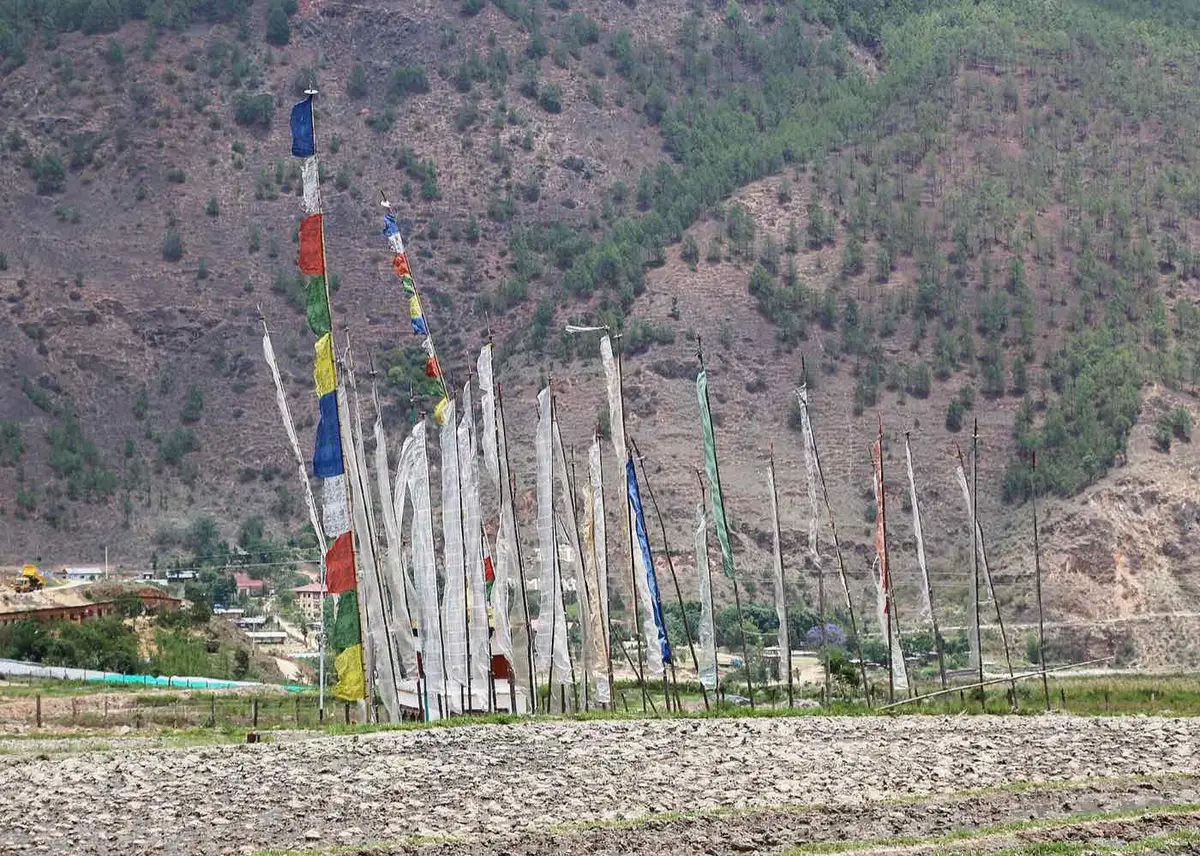
The monastery sits at around 3,120 metres above sea level, roughly 900 metres above the floor of the Paro valley. The trail begins near the base of the mountain and climbs steadily through blue pine and oak, decorated with prayer flags.
The route in stages
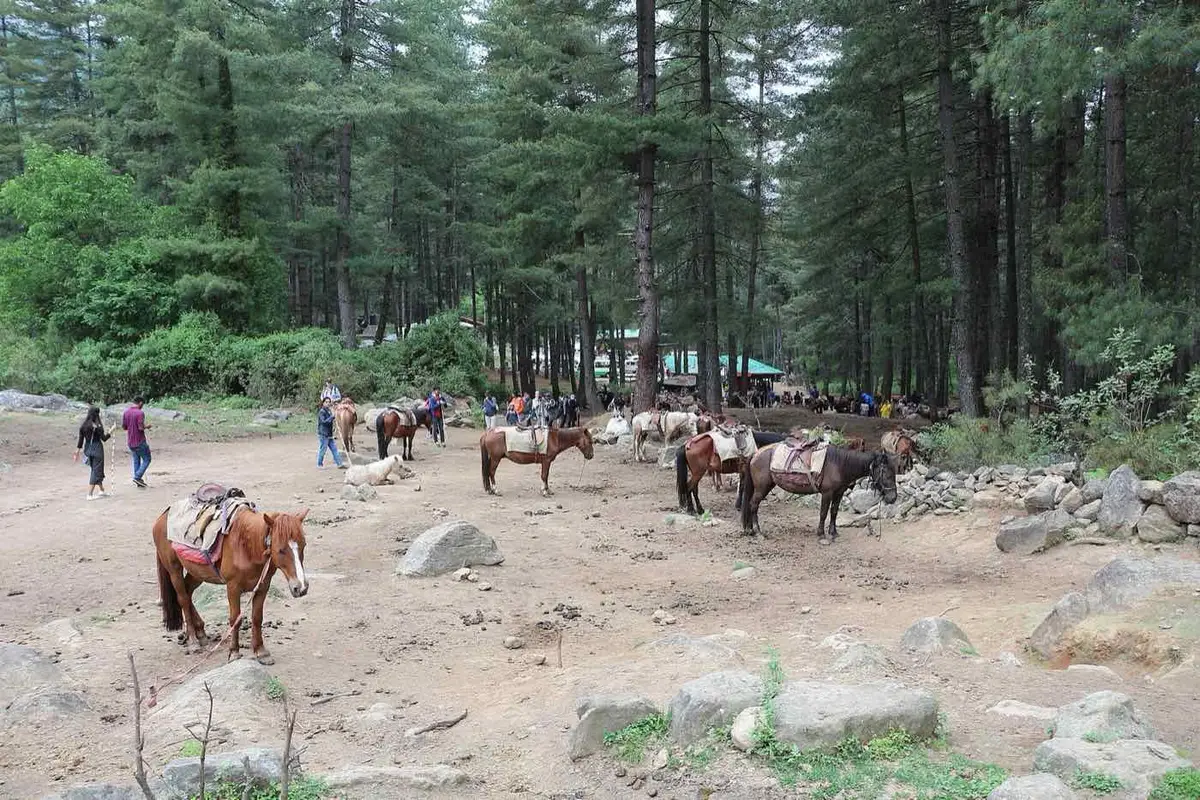
- The lower trail. A wide, dusty path climbs through forest. Ponies can carry visitors up this first section if needed.
- The cafeteria viewpoint. Roughly halfway, a rest stop offers the first close view of the monastery across the gorge. Many people stop here for tea.
- The final viewpoint. The trail continues higher to a ridge level with the monastery, the classic photograph spot.
- The stairs and waterfall. A long flight of steps descends into the gorge, past a waterfall, then climbs again to the monastery gate. Ponies cannot do this section.
Most visitors take four to six hours for the round trip, including time inside. Our Tiger's Nest hike guide covers the route in more detail.
How to experience Taktsang well
Tiger's Nest can be a crowded tick-box, or it can be a quiet, moving pilgrimage. The difference is mostly in how you approach it.
- Go early. Starting soon after the trail opens means cooler air, softer light and fewer people on the stairs.
- Acclimatise first. Save the hike for the end of your trip, after a few days at altitude in Thimphu, Punakha or Phobjikha.
- Walk slowly and stop often. There is no prize for speed. Pilgrims take their time, and so should you.
- Ask your guide for the stories. Each chorten, prayer wheel and shrine on the way has meaning. Knowing them changes the walk.
- Pause at the viewpoint. Sit for a few minutes before descending the final stairs. Let the place sink in.
- Observe temple etiquette. Cover shoulders and knees, remove hats and shoes where asked, and move clockwise.
For travellers drawn to the spiritual side of Bhutan, Taktsang pairs naturally with other sites linked to the Guru, such as Kyichu Lhakhang in Paro and Kurjey Lhakhang in Bumthang. Our Footsteps of Guru Rinpoche journey traces these places in sequence.
Planning tips
- Best seasons: spring (March to May) and autumn (late September to November) usually bring the clearest views. Winter is crisp and quiet; summer can be misty and wet, though the forest is beautiful.
- What to wear: sturdy shoes with good grip, layers you can add or remove, and modest clothing for the temples. A light rain jacket is wise in any season.
- What to carry: water, snacks, sunscreen, a hat and walking poles if you use them. Bags, phones and cameras are left at the entrance before you go inside.
- Fitness: the walk is moderate to challenging, mainly because of altitude. Anyone with reasonable fitness who walks at their own pace can usually make it.
- Health: if you feel dizziness, nausea or a worsening headache, stop and tell your guide. Turning back is always the right choice when you are unwell.
- Combine it well: a day or two in Paro beforehand lets you see the dzong, the National Museum and the valley at a gentle pace.
A place that rewards patience
Tiger's Nest is extraordinary from the first glimpse, but it is the slow approach that makes it unforgettable: the fluttering flags, the sound of the waterfall, the smell of butter lamps as you step inside. Walk it as the Bhutanese do, with patience and respect, and you will carry the cliff with you long after you leave. If you would like help shaping a journey around it, we are always happy to talk at our contact page.