In Bhutan, faith is not tucked away inside temples. It flutters from every ridge in the form of prayer flags, turns in the hands of elderly people walking around a chorten at dawn, and rings out in the drums and horns of a monastery at prayer. For first-time visitors this can be both beautiful and a little bewildering. You do not need to be Buddhist, or know anything about Buddhism, to enjoy Bhutan. But a little understanding makes every temple visit richer, and helps you move through sacred places with confidence and respect.
A Vajrayana kingdom
Bhutan follows Vajrayana Buddhism, a tradition that grew out of the wider Mahayana school and is shared with Tibet, Ladakh, Sikkim and parts of Nepal. Like all Buddhism, it rests on the teachings of the historical Buddha: that suffering arises from craving and ignorance, and that it can be overcome through ethical living, meditation and wisdom.
Vajrayana adds a rich layer of ritual and practice. You will see it in the use of mantras, mandalas and visualisation, in the many enlightened beings depicted on temple walls, and in the central importance of the teacher, or lama, who guides students along the path. Compassion for all living beings sits at the heart of it all.
Guru Rinpoche and the arrival of Buddhism
Buddhism reached Bhutan in stages. The earliest temples, such as Kyichu Lhakhang in Paro and Jambay Lhakhang in Bumthang, are traditionally dated to the seventh century and the Tibetan king Songtsen Gampo.
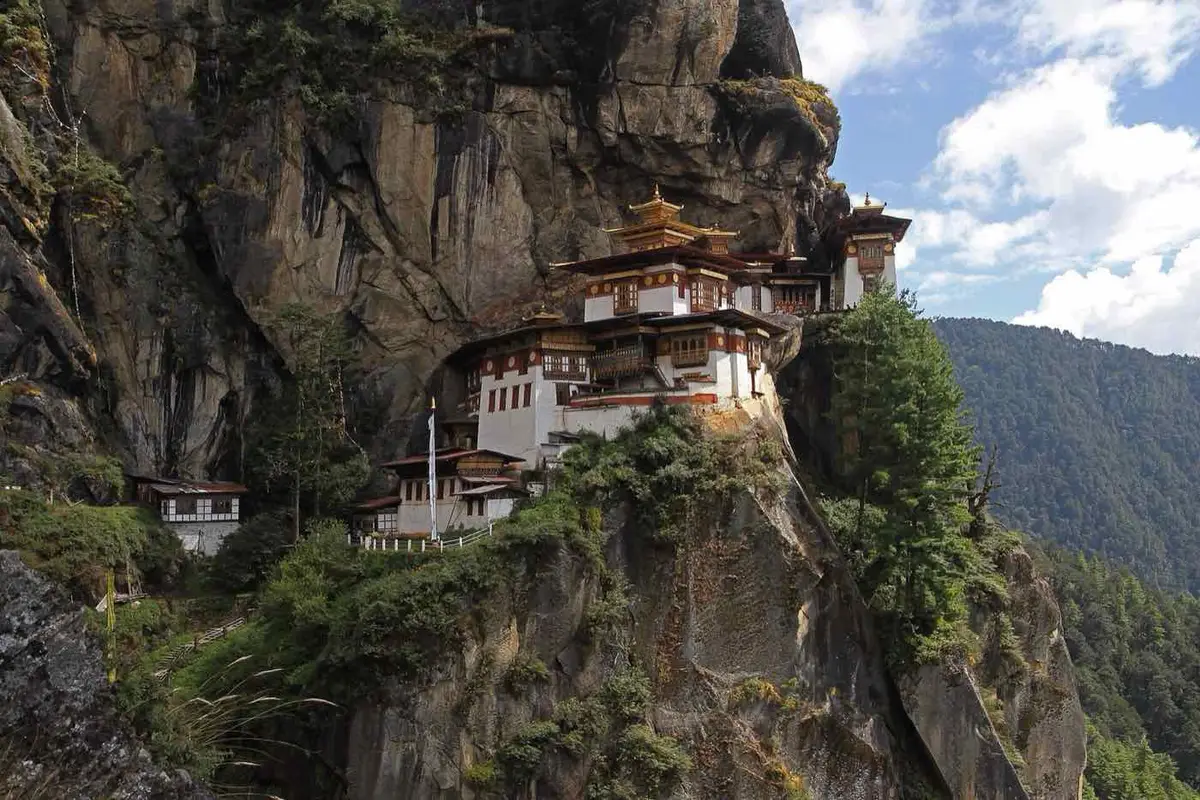
The figure most Bhutanese credit with truly establishing the faith, however, is Guru Rinpoche, also known as Padmasambhava, the "Lotus-Born". In the eighth century, tradition holds, he came to Bumthang to heal a local king, and travelled widely through the country, subduing hostile spirits and blessing caves and mountains for meditation. The most famous of these is Taktsang, the Tiger's Nest, where he is said to have arrived on the back of a flying tigress.
You will see Guru Rinpoche everywhere: a calm, moustached figure in a lotus hat, holding a vajra and a skull cup. Many Bhutanese consider him a second Buddha. To walk in his footsteps, see our Footsteps of Guru Rinpoche journey.
The Drukpa Kagyu and the Zhabdrung
Several schools of Buddhism took root in Bhutan over the centuries. The one that became the state religion is the Drukpa Kagyu school, brought from Tibet from the thirteenth century onwards. Its name gives Bhutan its own: in Dzongkha the country is Druk Yul, the Land of the Thunder Dragon.
In 1616, a Drukpa lama named Ngawang Namgyal arrived from Tibet. Known by the title Zhabdrung, he unified the warring valleys, built the great dzongs and established a system of government that joined religious and civil authority. His legacy is everywhere you travel.
The Nyingma school, the oldest Tibetan tradition and the one most closely linked to Guru Rinpoche, also flourishes, especially in central and eastern Bhutan. Today the Central Monk Body is led by the Je Khenpo, Bhutan's chief abbot.
Symbols you will see everywhere
Prayer wheels
Prayer wheels are cylinders filled with tightly rolled scrolls of mantras, most often Om mani padme hum, the mantra of compassion. Turning a wheel is believed to have the same merit as reciting the prayers within it. They range from small hand-held wheels to huge ones housed in their own buildings, and some are turned by streams. Always turn them clockwise.
Prayer flags
Prayer flags are printed with prayers and mantras, and the wind is believed to carry their blessings across the land. The coloured flags strung across passes and bridges are called lungta, or wind horse, flags. Their five colours, blue, white, red, green and yellow, are associated with the elements.
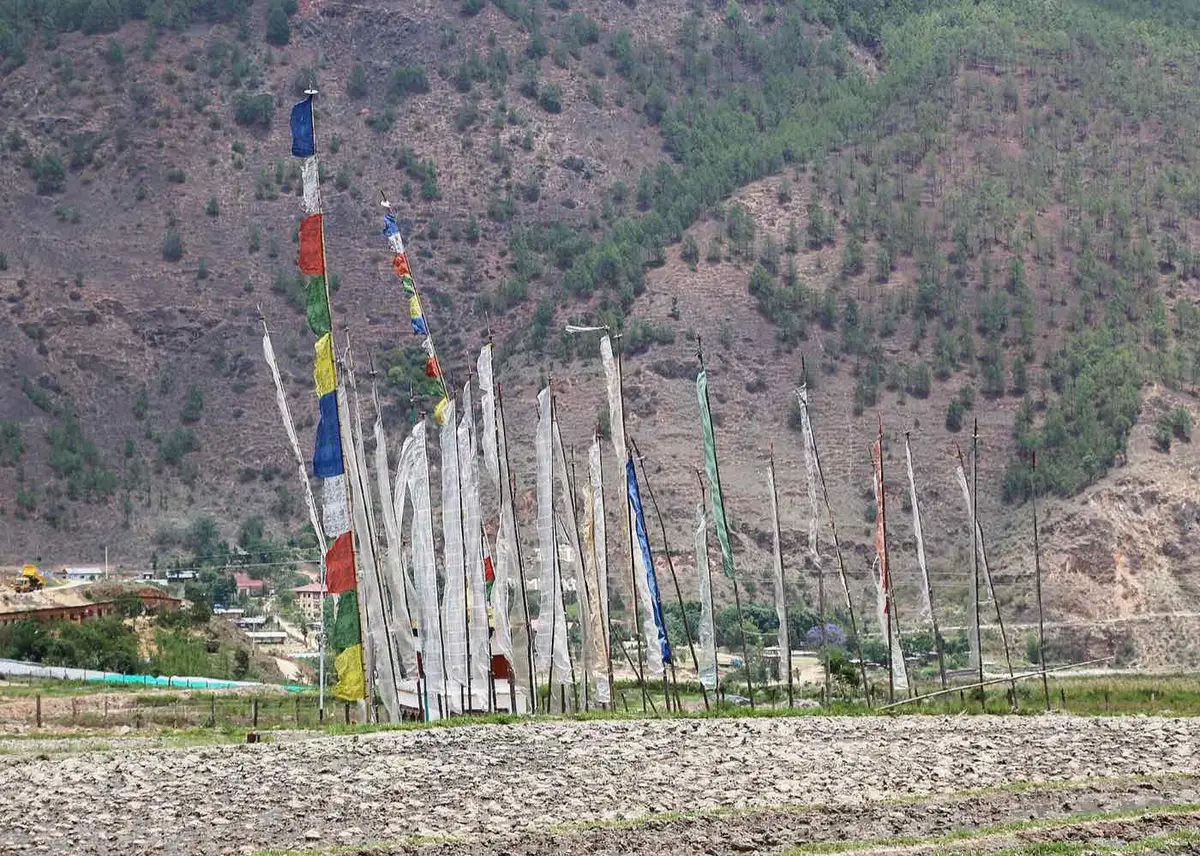
Tall white flags on vertical poles, often seen in groups on hillsides, are raised in memory of the dead. Families traditionally put up 108 of them to bring merit to a loved one.
Chortens
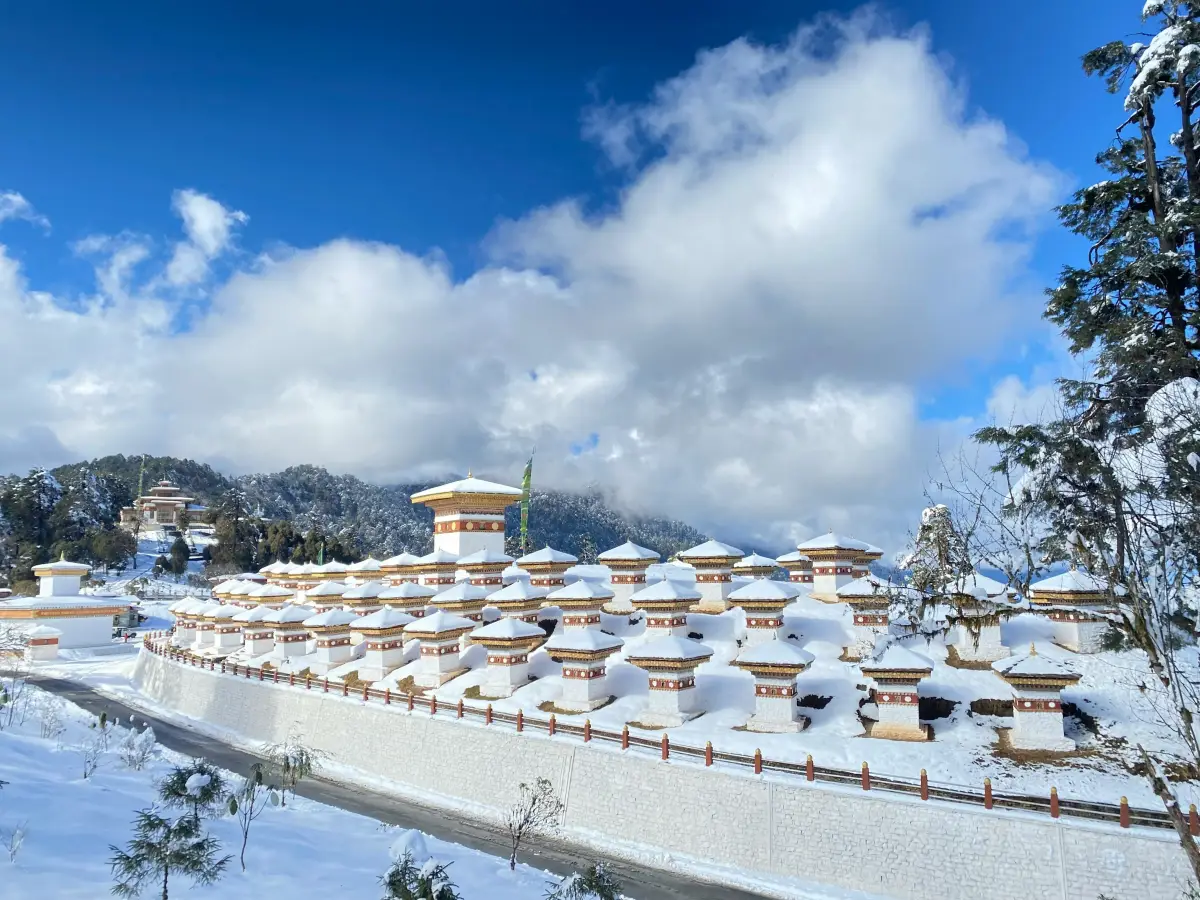
A chorten, or stupa, is a monument representing the enlightened mind of the Buddha. Many hold relics or sacred texts. You will see them on hilltops, at crossroads and beside bridges, in Bhutanese, Tibetan and Nepali styles. The Memorial Chorten in Thimphu is a good place to watch locals circling and praying throughout the day.
Remember: always walk clockwise around chortens, temples and prayer wheels, keeping them on your right. Your guide will gently steer you if you forget.
Butter lamps
Butter lamps are offered in temples as a symbol of wisdom dispelling the darkness of ignorance. Traditionally they burn clarified butter; today vegetable oil is also common. Many temples have a separate room for lamps, and you may be invited to light one and make a wish.
Lhakhang, goenpa or dzong?
These three words come up constantly, and they are easy to mix up.
- Lhakhang: a temple. It may be tiny and looked after by a single caretaker, or large and ancient. Chimi Lhakhang and Kyichu Lhakhang are examples.
- Goenpa: a monastery, a place where monks live and study. Goenpas are often built in remote, elevated places suited to meditation. Gangtey Goenpa above the Phobjikha valley is one of the best known.
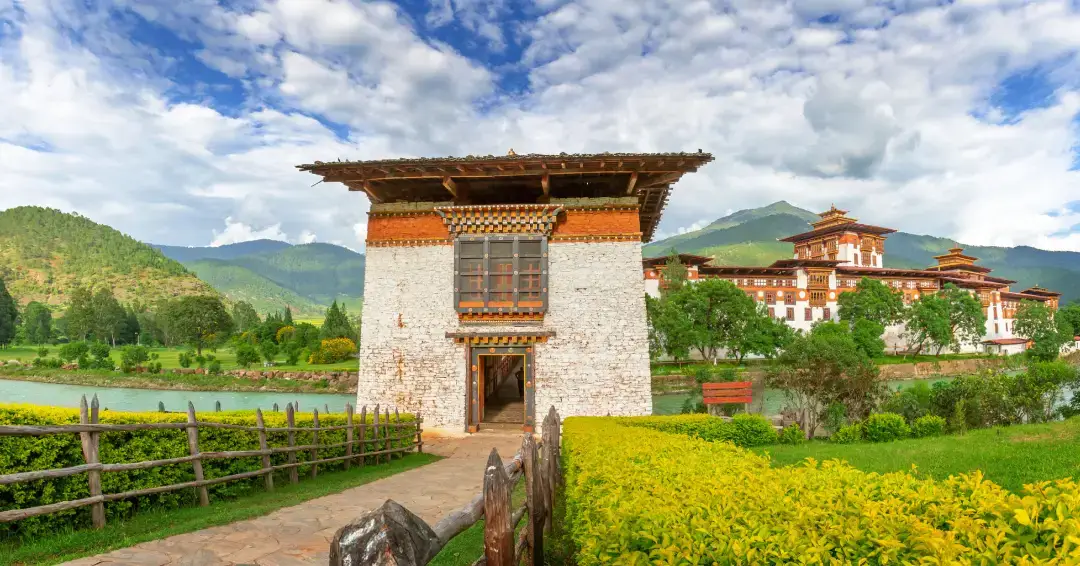
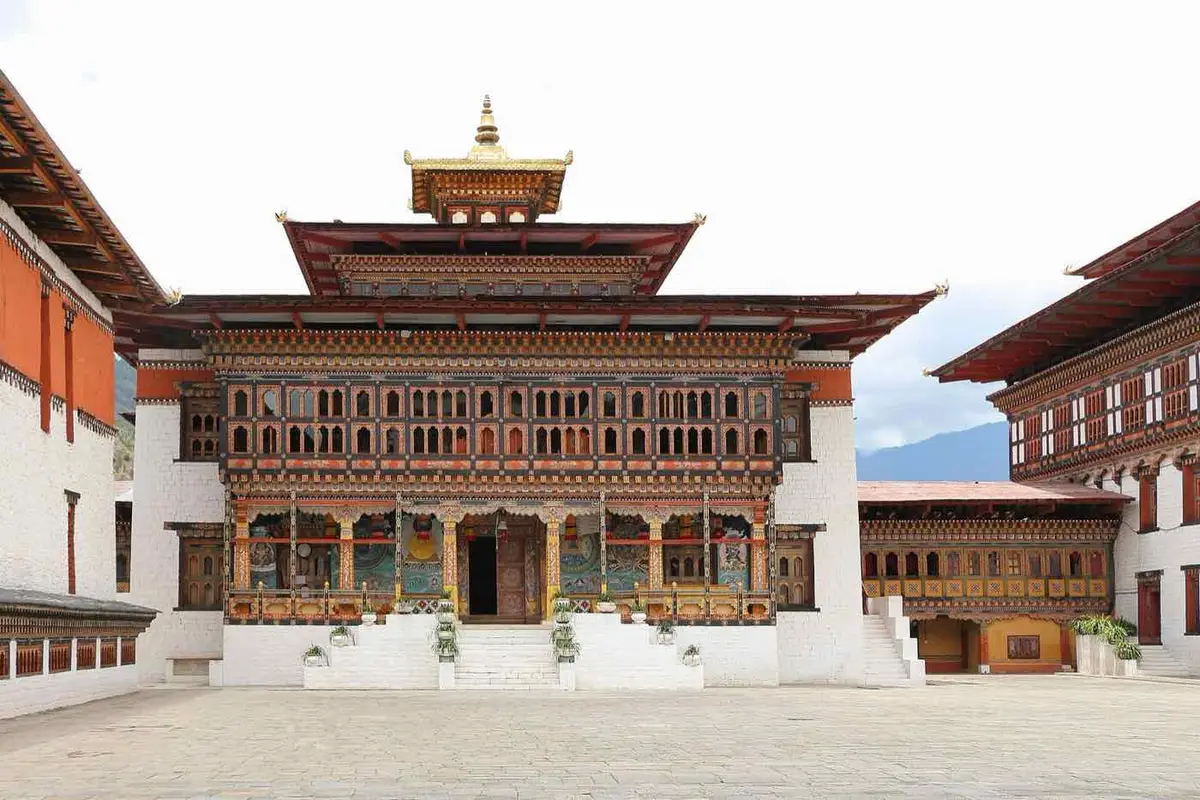
- Dzong: a fortress that houses both a monastic community and the district administration. Punakha Dzong and Tashichho Dzong in Thimphu are the great examples.
How to behave in temples
Bhutanese are warm and forgiving with visitors, but a few simple customs show respect.
- Dress modestly. Cover your shoulders and knees, and remove hats before entering.
- Remove your shoes where asked, usually at the entrance to the inner temple.
- Do not take photographs inside. Photography is not allowed inside temples and shrine rooms. Courtyards are usually fine.
- Move clockwise inside temples, as you would around a chorten.
- Do not point your feet at altars, statues or monks when sitting, and avoid touching statues, murals or ritual objects.
- Speak softly, and keep your phone on silent.
- Make an offering if you wish. A small note placed on the altar is customary. Your guide will show you how.
You may be offered holy water. Hold out your right hand, cupped over your left, sip a little and pass the rest over your head. Some inner protector chapels are closed to visitors, or to women; your guide will let you know.
Meeting monks
You will see monks everywhere, from young novices in maroon robes playing in a courtyard to elderly lamas deep in prayer. Many enjoy a friendly greeting and a simple conversation, especially the younger monks, who may be keen to practise their English.
Greet them as you would anyone, with a smile and kuzu zangpo la. Ask before taking a photograph, avoid physical contact, and be mindful during prayers and ceremonies. If you would like a deeper conversation about Buddhist practice, ask your guide in advance: a talk with a monk or lama can often be arranged, and is one of the highlights of our Living Buddhism: Monasteries and Masters journey.
Planning tips
- Visit a temple early in the morning, when locals come to pray and the atmosphere is at its most peaceful.
- Time your trip with a festival. Tshechus bring masked dances that bring Buddhist teachings to life, and dates follow the lunar calendar.
- Ask questions. Bhutanese guides are knowledgeable and happy to explain the stories behind the paintings and statues.
- Pace yourself. Temples are intricate; seeing a few properly is better than rushing through many.
Come with curiosity and an open heart, and you will find that Bhutan's Buddhism is not something to observe from a distance, but something you are warmly invited to share.