Many countries talk about wellbeing. Bhutan built a national philosophy around it. Gross National Happiness, often shortened to GNH, is the idea that a nation's progress should be judged not only by how much it produces, but by how well its people live, how healthy its environment remains and how strongly its culture endures.
For visitors, GNH can sound abstract, even like a slogan. In practice it shapes a great deal of what you will see in Bhutan, from protected forests and traditional architecture to the way tourism itself is organised. Here is how it began and how it works.
Where the idea came from
Gross National Happiness is credited to His Majesty Jigme Singye Wangchuck, the Fourth King of Bhutan, who came to the throne in 1972. During the 1970s he expressed the view that Gross National Happiness matters more than Gross National Product, a phrase that has since travelled around the world.
The thinking behind it was rooted in Buddhist values and in Bhutan's own situation. A small Himalayan kingdom, opening slowly to the outside world, could see both the benefits and the costs of rapid development elsewhere. The aim was to modernise while keeping what made Bhutan itself: its culture, its environment and its sense of community.
Over the following decades the idea grew from a guiding principle into a framework for policy. Bhutan's Constitution, adopted in 2008, directs the state to promote the conditions that enable the pursuit of Gross National Happiness.
The four pillars
GNH is usually described as resting on four pillars. Each is a broad area that policy should support and protect.
- Sustainable and equitable socio-economic development. Growth that improves lives fairly and does not borrow from the future.
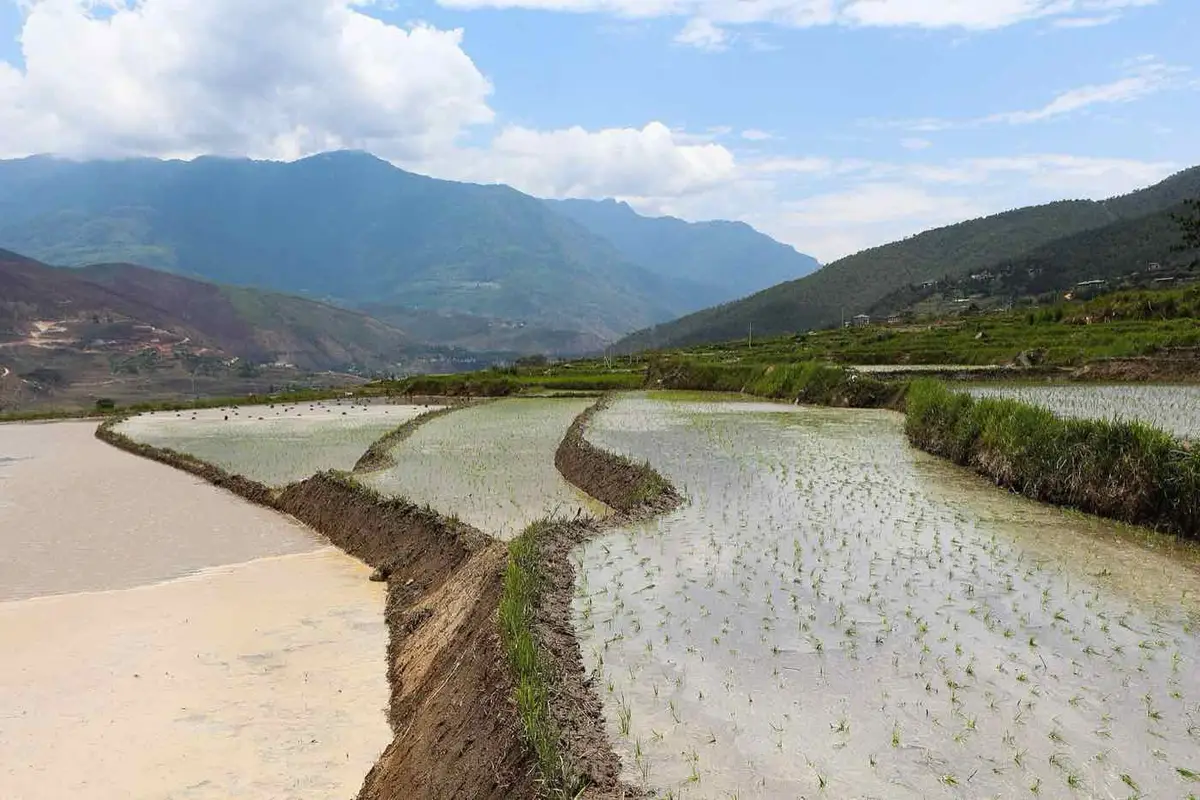
- Environmental conservation. Protecting forests, rivers, wildlife and the natural systems on which everything else depends.
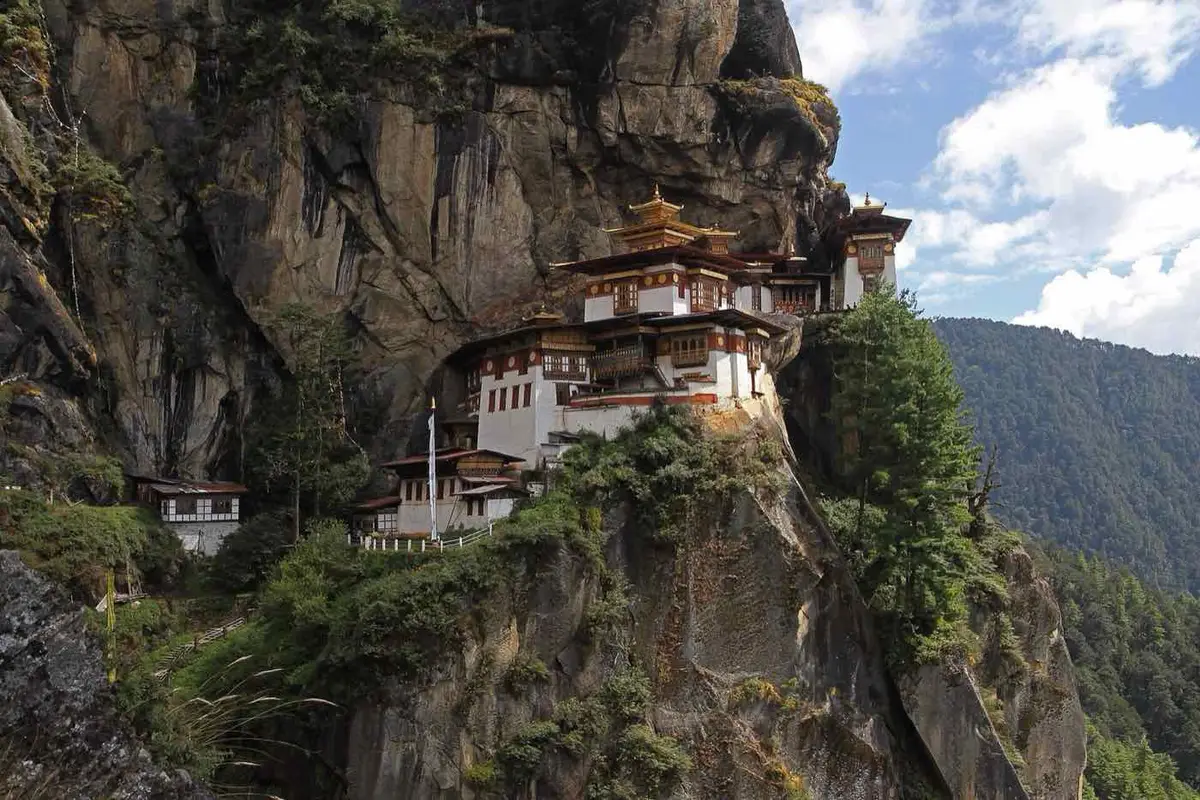
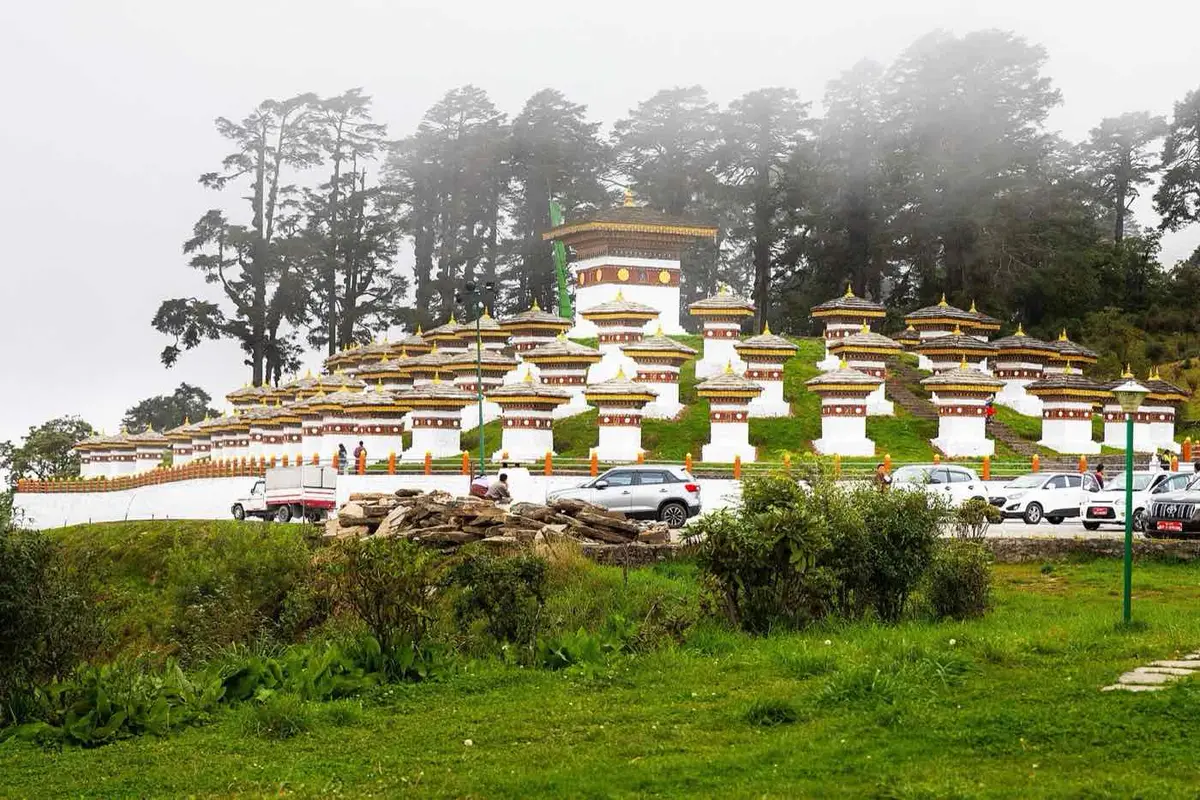
- Preservation and promotion of culture. Keeping language, religion, arts, dress and architecture alive and meaningful.
- Good governance. Fair, transparent and accountable institutions that serve the people.
The nine domains
To make the idea measurable, the four pillars were developed into nine domains, each given equal weight. Researchers in Bhutan have used them to survey how people are living and where they are struggling.
- Psychological wellbeing
- Health
- Education
- Time use, including the balance between work, rest and sleep
- Cultural diversity and resilience
- Good governance
- Community vitality, such as trust, relationships and volunteering
- Ecological diversity and resilience
- Living standards
Why "time use" is on the list
Visitors are often surprised to see time use among the domains. It reflects a simple observation: a society where people have no time for family, community, rest or reflection is not thriving, however wealthy it becomes. Few national frameworks anywhere treat time as a measure of wellbeing.
Worth remembering: GNH does not claim that every Bhutanese person is happy. It is a compass for decision-making, not a promise. Bhutan faces real challenges, including youth unemployment and emigration, and Bhutanese people discuss them openly.
How GNH shapes tourism
When Bhutan opened to international visitors in 1974, it chose a cautious path. Rather than encouraging mass tourism, it aimed to welcome travellers in a way that would benefit the country without overwhelming its culture or environment. This approach became known as High Value, Low Volume.
The Sustainable Development Fee
The clearest expression of this policy today is the Sustainable Development Fee (SDF). Most international visitors pay a fee for each night they spend in the country. The current rate for adults is US$100 per night.
The SDF is not a hotel charge or a tour price. It goes to the government and is intended to support:
- Free healthcare and education for Bhutanese citizens
- Conservation of forests, wildlife and natural heritage
- Preservation of cultural sites and traditions
- Sustainable infrastructure and community projects
Our visa guide explains how the fee fits alongside the visa and other trip costs.
Licensed guides and approved accommodation
Visitors travel with licensed Bhutanese guides and stay in accommodation approved by the Department of Tourism. This keeps standards high, provides skilled employment for Bhutanese people, and helps ensure that tourism respects local customs and sacred sites.
What visitors notice
GNH is easiest to understand not through definitions, but through the things you see along the road.
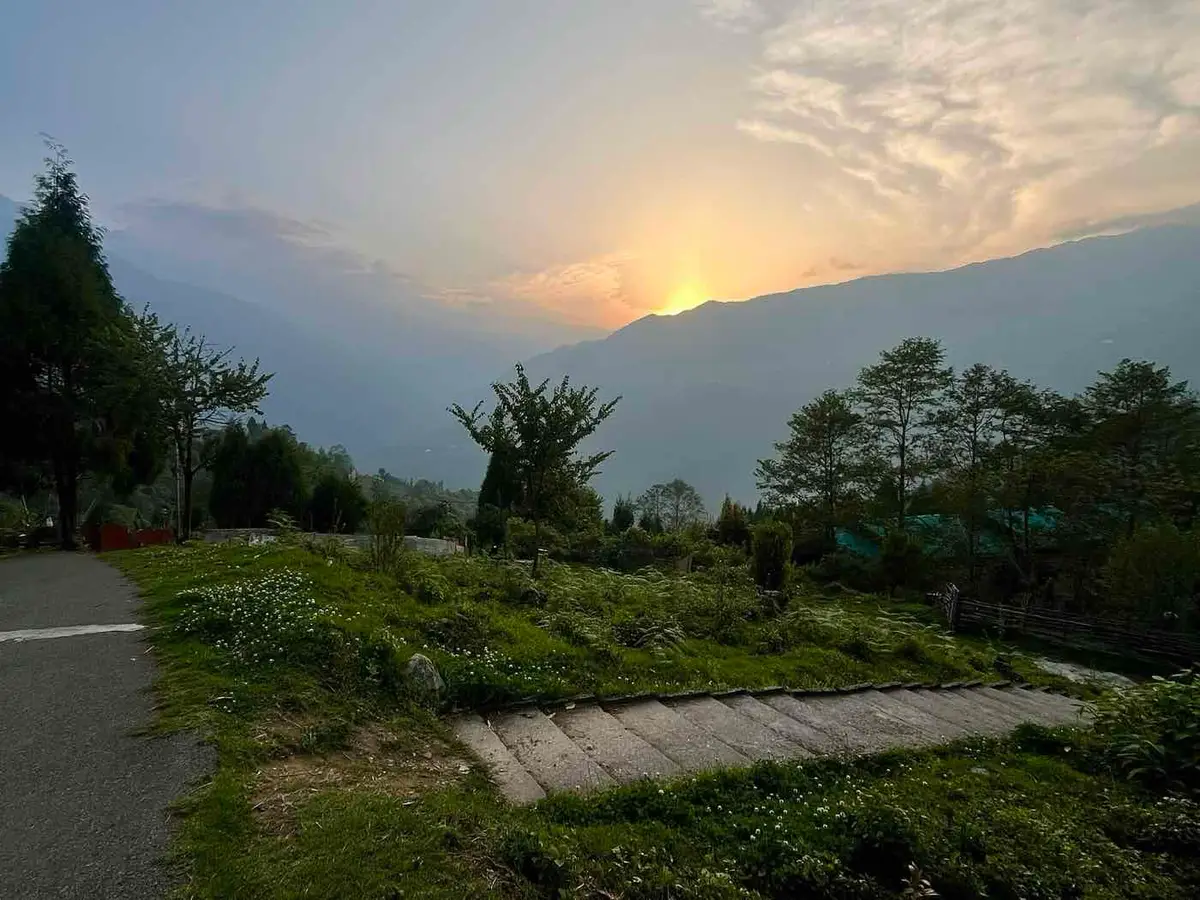
- Forests everywhere. The Constitution requires that at least 60 per cent of the country remain under forest cover, and the hillsides show it. Bhutan is widely recognised as carbon negative, absorbing more carbon than it emits.
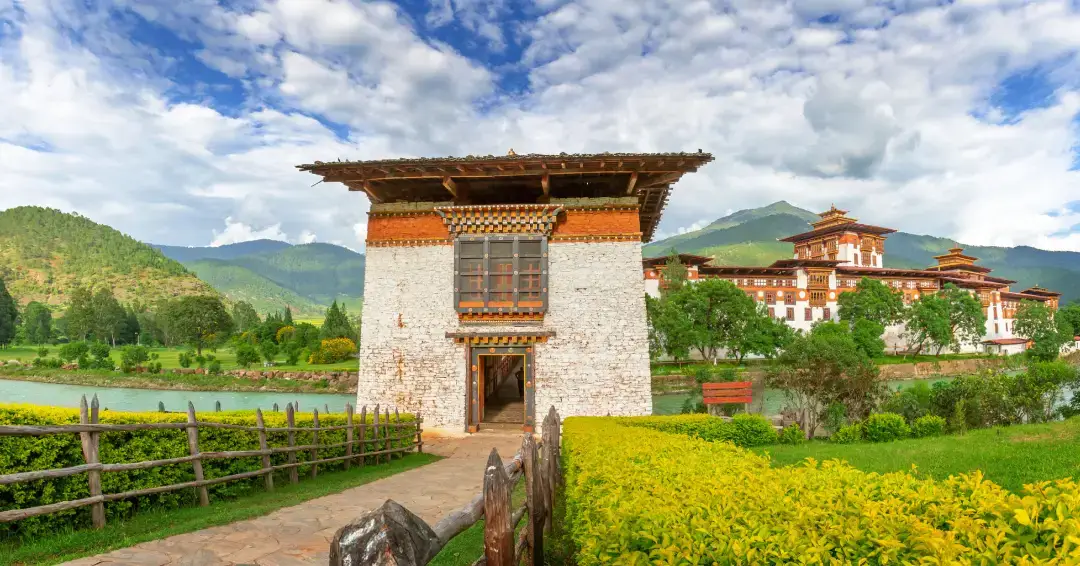
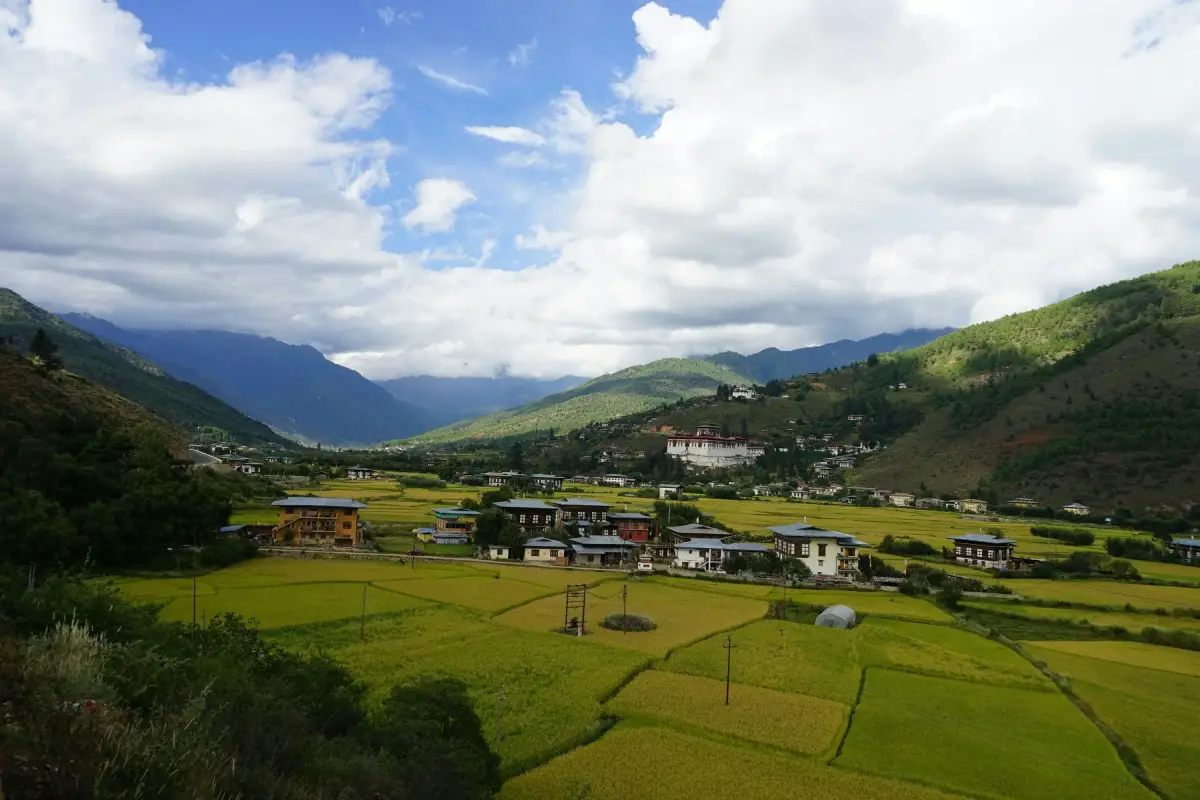
- Traditional architecture. New buildings, from homes to hotels, are expected to follow traditional styles, with painted window frames and sloping roofs.
- National dress. Many people wear the gho and kira daily, and they are required in government offices and at dzongs.
- No traffic lights in the capital. Thimphu's police still direct traffic by hand at the main junction, a small but much-photographed example of choosing character over convenience.
- A slower pace. Shops close for festivals, farmers stop to chat, and conversations rarely feel rushed.
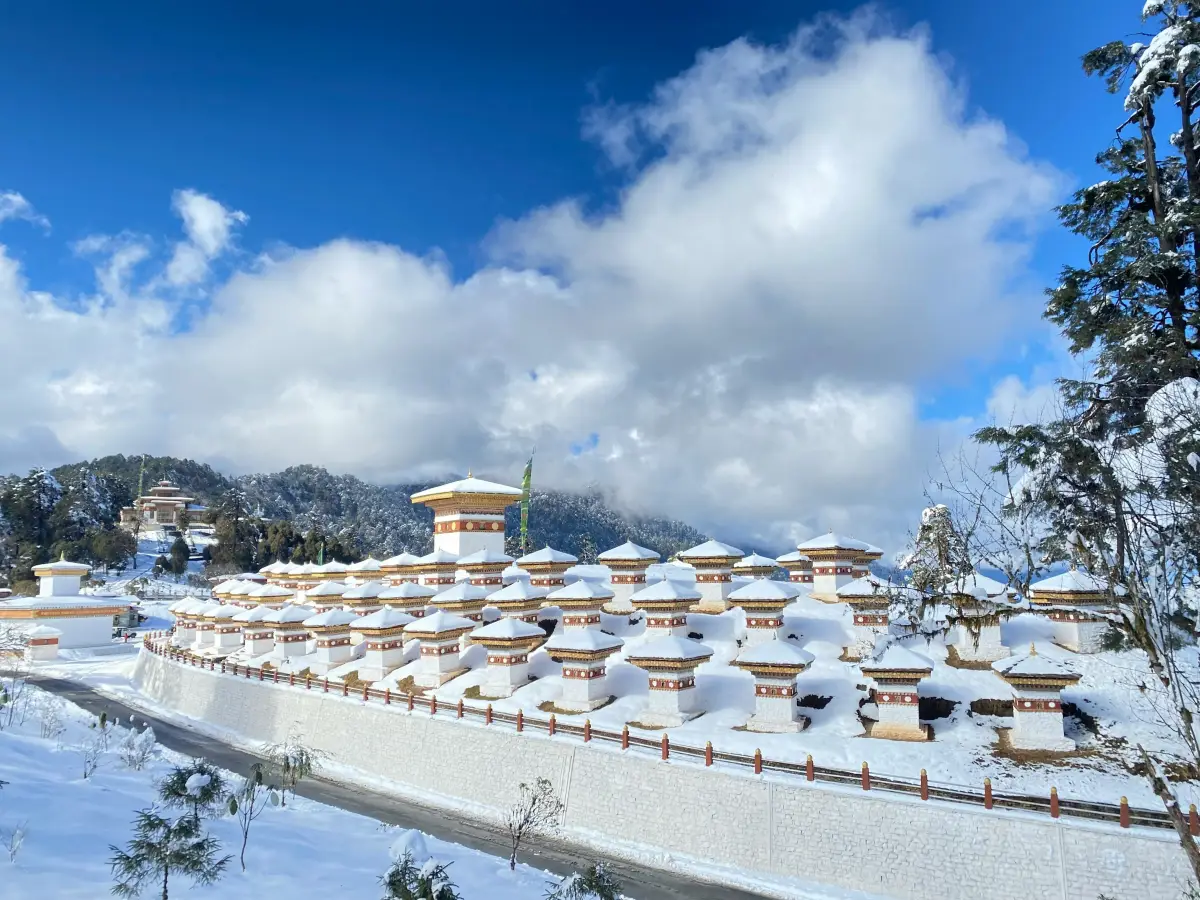
- Respect for nature and life. Many hilltops and lakes are considered sacred, and some mountains are left unclimbed out of respect for the deities believed to live there.
Visitors who spend time in rural communities often feel GNH most directly. A night in a farmhouse, sharing butter tea and stories by the stove, shows community vitality more clearly than any survey. Our village and homestay journey is designed around exactly this.
GNH beyond Bhutan
Bhutan's ideas have influenced international conversations about how to measure progress. In 2011 the United Nations General Assembly adopted a resolution, introduced by Bhutan, inviting countries to give more importance to happiness and wellbeing in their development. The International Day of Happiness, marked each year on 20 March, followed soon after.
Economists and governments elsewhere have since explored wellbeing measures of their own, and Bhutan is often cited as a pioneer.
Planning tips
- Ask your guide about GNH. Many guides have strong, thoughtful views and will happily share how it affects their own lives.
- Spend time in the countryside. The idea feels most real in villages, valleys and farmhouses, not only in towns.
- Visit a dzong on a working day. You will see monks and civil servants side by side, a living image of culture and governance together.
- Consider a reflective retreat. Our mindfulness and wellness retreat brings meditation, walking and quiet time into the journey.
- Budget for the SDF from the start. It is part of every night of your stay and is best treated as your contribution to the country.
- Travel slowly. Fewer places, more time in each, is the GNH way to see Bhutan.
A different way of measuring a good life
Gross National Happiness is not a finished achievement but an ongoing question: what kind of progress is worth having? Spend a little time in Bhutan and you may find yourself asking it of your own life too. That, perhaps, is the most lasting souvenir the kingdom offers.