In most kitchens of the world, chillies are a seasoning. In Bhutan they are the main ingredient. Strings of red chillies drying on rooftops are one of the country's most familiar sights, and at almost every meal you will find them simmered with cheese, served with mounds of red rice, and eaten with obvious delight.
Bhutanese food is simple, hearty and seasonal, shaped by high valleys, cold winters and farming families. It can be fiery, but it is also warming, honest and surprisingly varied. Here is a guide to what you will find, and how to enjoy it.
Ema datshi and the datshi family
Ema datshi is Bhutan's national dish. Ema means chilli and datshi means cheese. Green or red chillies are cooked with a soft local cheese, often with onion and tomato, until they form a rich, molten stew. It appears at lunch and dinner in homes, hotels and roadside cafés alike.
The cheese is usually a mild farmers' cheese made from cow's milk, sometimes from yak's milk in the highlands. It softens the heat, though only partly, so take your first spoonful slowly.
Once you know ema datshi, you will meet its relatives everywhere:
- Kewa datshi: potatoes in cheese sauce, often with a little chilli. A gentle favourite with visitors.
- Shamu datshi: mushrooms cooked with cheese, especially good in the monsoon season when wild mushrooms appear.
- Shamu kewa datshi: both mushrooms and potatoes together.
- Kewa phagsha and phaksha paa: pork dishes, the latter usually cooked with dried chillies and radish or greens.
How spicy is it?
Bhutanese cooks use chillies generously, and the heat in a home kitchen can be considerable. Hotels and restaurants used to hosting visitors often prepare milder versions. If you prefer gentle flavours, say so early; your guide can pass the message on before every meal.
Red rice: the heart of the plate
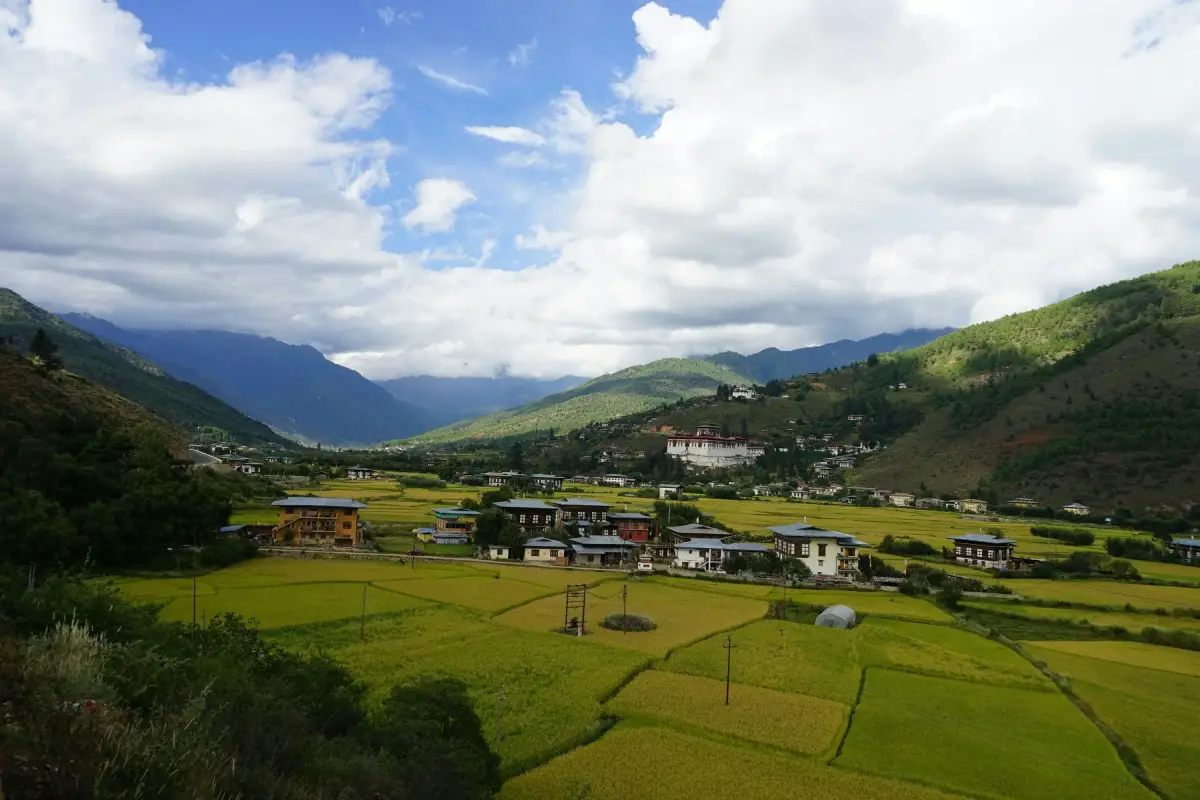
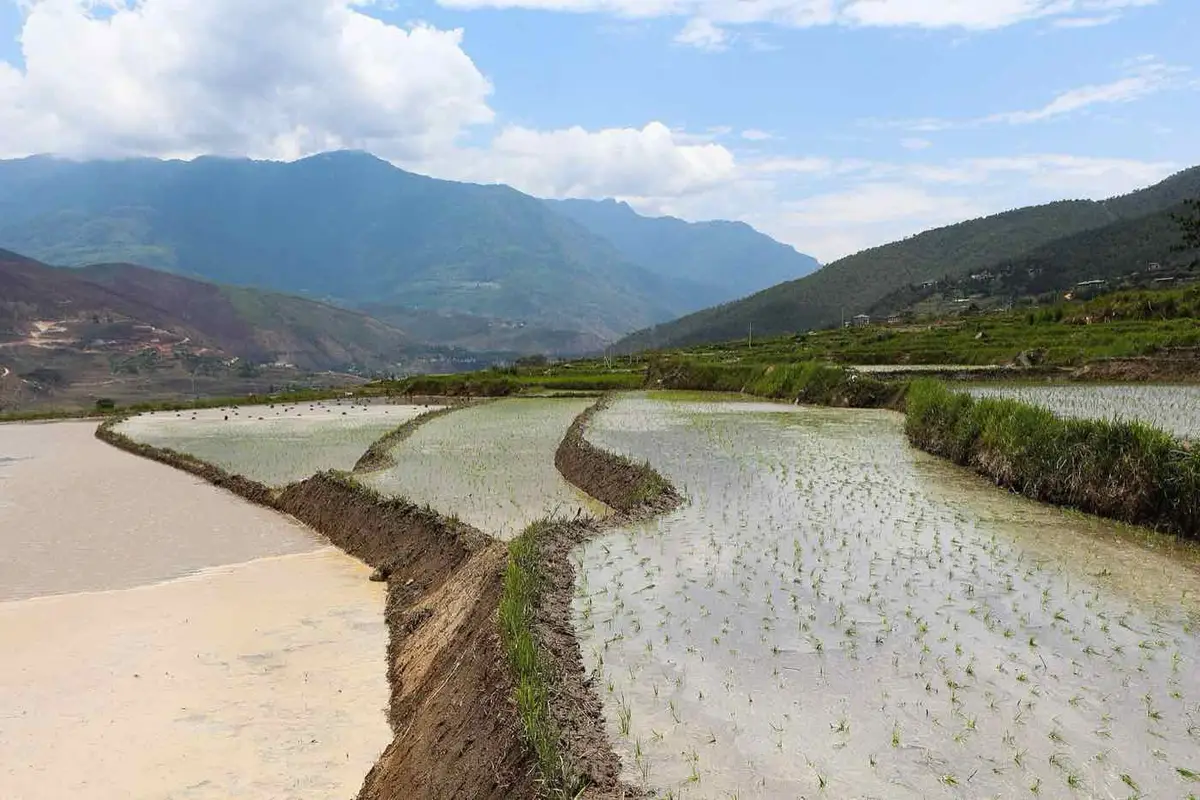
Bhutanese meals are built around rice, and the most distinctive is red rice, grown in the valleys of Paro and elsewhere. It has a slightly nutty flavour and a soft, sticky texture, and its red husk gives it a beautiful colour.
Rice is served in generous portions, with smaller amounts of curries and vegetables alongside. Traditionally it is the bulk of the meal, and the dishes around it are there to flavour it.
Buckwheat country: the food of Bumthang
In the high, cooler valleys of central Bhutan, rice was historically harder to grow, and buckwheat became the staple. Bumthang remains the heartland of buckwheat cooking.
Look out for:
- Puta: buckwheat noodles, often tossed with butter, cheese or mustard oil.
- Khule: buckwheat pancakes, eaten with ema datshi or butter.
- Hoentay: buckwheat dumplings stuffed with turnip greens, cheese and spices, a speciality of the Haa valley in the west.
Bumthang is also known for its honey, cheese and apples, and a visit to a local farm can be one of the tastiest stops of a journey.
A tip from our kitchen: if you have a chance to visit a farmhouse, ask to help with the cooking. Rolling buckwheat dough or stirring a pot of datshi by a wood stove is a wonderful way to understand Bhutanese food.
Momos and other favourites
- Momos: steamed dumplings filled with cheese, vegetables, pork or beef, served with a fiery chilli sauce. Beloved across the Himalaya and easy to love.
- Jasha maru: a spiced chicken stew with garlic, ginger and tomato.
- Shakam: dried beef, usually cooked with chillies.
- Suja with zaw: butter tea served with crunchy toasted rice.
- Seasonal greens: fern shoots (nakey), asparagus in spring and many local leaves.
Butter tea, ara and other drinks
Suja, butter tea
Suja is tea churned with butter and salt. To first-time visitors it can taste more like a savoury broth than a cup of tea, but in cold mountain air it is warming and comforting. It is offered in homes as a sign of welcome. You may be offered refills many times, so sip slowly if you prefer not to drink too much.
Ara, the home spirit
Ara is a traditional spirit, distilled at home from rice, maize, wheat or barley. It is often warmed and sometimes served with butter or egg stirred in. Ara plays a part in hospitality and celebrations, especially in rural areas. Drink it in moderation, as it can be stronger than it tastes, and remember that altitude can amplify its effects.
Other drinks
Sweet milk tea (ngaja) is common across the country. Bhutan also produces its own beer and fruit juices, and you will find plenty of bottled water.
Eating etiquette
Bhutanese hospitality is generous, and a few customs will help you feel at ease.
- Expect to be offered food more than once. It is polite for a host to insist and polite for a guest to decline gently once or twice, saying meshu meshu, before accepting.
- Wait for the host or elders. Meals often begin once everyone has been served and the eldest has started.
- Eat with your right hand if you are eating by hand, especially in villages. Cutlery is always available for visitors.
- Do not waste food. Take a modest first serving; you can always have more.
- Accept with both hands when a cup or plate is passed to you, as a sign of respect.
- An offering first. You may see a host flick a few drops of drink into the air before drinking, an offering to the deities.
Vegetarian and mild options
Bhutan is an easy country for vegetarians. Many Bhutanese eat little or no meat for religious reasons, and in some periods of the Buddhist calendar the sale of meat is restricted. Datshi dishes, vegetable curries, dal, momos and buckwheat dishes are all widely available meat-free.
For milder flavours, good choices include kewa datshi, vegetable momos, plain red rice, dal, sautéed greens and noodles. Vegans and those with allergies should tell their tour operator in advance, as dairy, especially cheese and butter, is central to Bhutanese cooking.
Planning tips
- Share dietary needs early. Tell your operator before you travel so hotels and homestays can prepare.
- Ask for "less ema". A simple request through your guide goes a long way.
- Try one new dish each day. Spread the adventure across your journey.
- Drink bottled or treated water, and be cautious with raw salads in remote areas.
- Visit a market. The Centenary Farmers' Market in Thimphu is a wonderful introduction to local produce, chillies and cheese.
- Stay in a farmhouse. Home cooking is where Bhutanese food is at its best, and our village and homestay journey brings you into family kitchens.
A table worth sitting at
Bhutanese food is not about elaborate technique. It is about warmth: a bowl of steaming red rice, a pot of datshi passed around the table, a cup of butter tea pressed into your hands on a cold afternoon. Eat with an open mind and an appetite, and you will leave with stories as memorable as the mountains. Kadrin chey la, and enjoy your meal.