On a still morning in late autumn, a call drifts across the Phobjikha valley: a high, bugling cry that carries for miles. Moments later a line of large grey birds appears over the ridge, wings outstretched, gliding down towards the marshes. The black-necked cranes have returned, and for the people of this valley, winter has officially begun.
Few places in the world offer such an intimate encounter with a rare bird, and fewer still have shaped their way of life around protecting it. Here is the story of the cranes of Phobjikha, and how to see them well.
Meet the black-necked crane
The black-necked crane (Grus nigricollis) is the only crane species that lives and breeds mainly on the high Tibetan plateau. It stands over a metre tall, with pale grey plumage, a black head and neck, and a striking red crown.
It is one of the least common cranes in the world. Its population has grown thanks to conservation work across its range, and it is now listed as Near Threatened by the IUCN, having previously been classed as Vulnerable. Bhutan protects it fully by law.
Revered in Bhutan
In Bhutanese culture the black-necked crane is a sacred bird, regarded as a heavenly visitor. It appears in folk songs, dances and stories, and harming one is considered deeply wrong. The cranes are often associated with good fortune, and their arrival is welcomed as a blessing on the valley.
The journey from the Tibetan plateau
The cranes spend the summer breeding on the high wetlands of the Tibetan plateau. As winter approaches and the plateau freezes, they fly south across the Himalaya to lower, milder valleys where they can find food.
In Bhutan, they usually arrive from late October and remain until February or March, before heading north again to breed. The two most important wintering sites in the country are Phobjikha in the west-centre and Bumdeling in the far east, with smaller numbers elsewhere.
In Phobjikha, the cranes feed in the marshes and fields of the valley floor, roosting together in the wetlands at night, where standing in shallow water helps keep them safe from predators.
The legend of Gangtey Goenpa
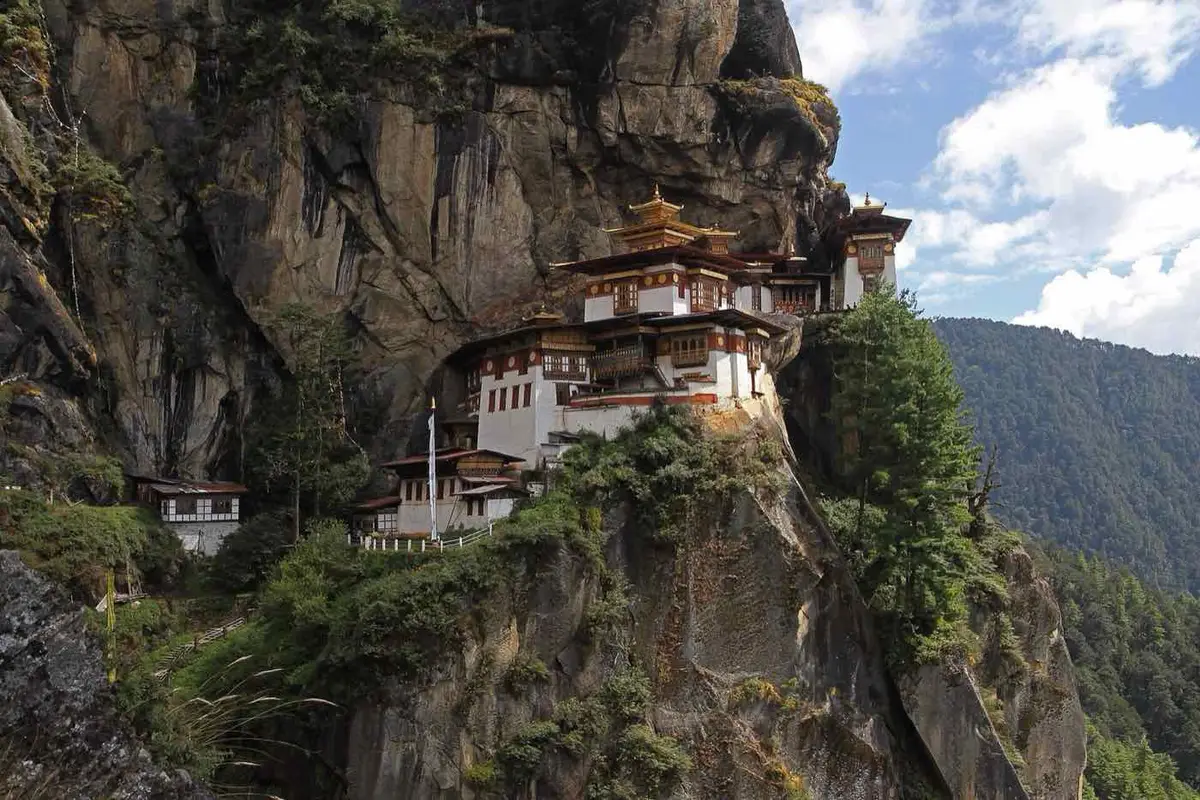
Overlooking the valley from a forested ridge is Gangtey Goenpa, an important monastery of the Nyingma tradition, founded in the early seventeenth century by Pema Thinley, the grandson of the treasure-revealer Pema Lingpa.
Local people tell that when the cranes arrive each autumn, they circle the monastery three times before landing, as if paying respect. When they leave again in late winter, they circle three times once more before flying north.
Whether you see it as devotion, navigation or simple coincidence, watching cranes wheel over the golden roof of the goenpa is a sight that stays with you.
A moment to look for: if you are in the valley in early November or late February, keep an eye on the sky above Gangtey Goenpa in the mornings. Your guide may know which days the birds have been moving.
Conservation: a valley that chose the cranes
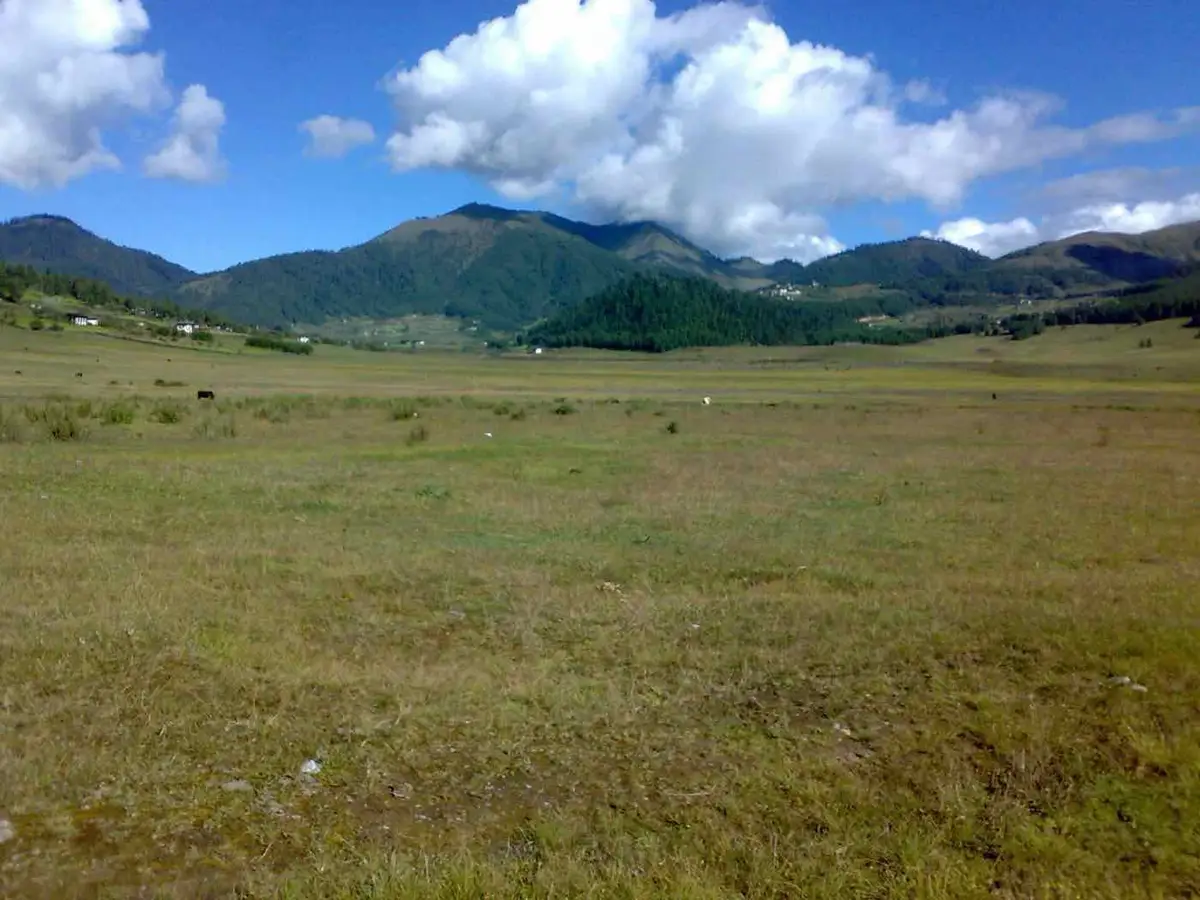
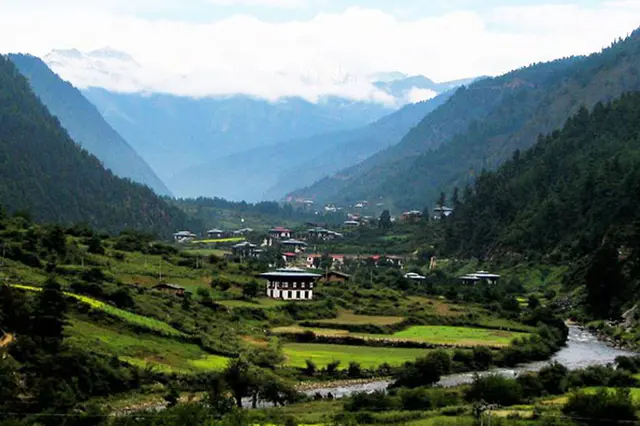
Phobjikha is a glacial valley at roughly 3,000 metres, broad and open, with marshland at its heart. Its wetlands were designated a Ramsar Site of international importance in 2016.
Protecting the cranes has required real choices from the people who live here.
The RSPN and the crane centre
The Royal Society for Protection of Nature (RSPN), Bhutan's oldest environmental organisation, has worked in Phobjikha for many years. It runs the Black-Necked Crane Information Centre on the edge of the valley, where visitors can learn about the birds' life cycle and conservation, and watch them through telescopes from a respectful distance.
The RSPN also works with local communities on livelihoods, waste management and protecting the wetland, so that conservation and village life support each other.
The buried power lines
When electricity was brought to the valley, overhead power lines posed a real risk: large birds flying low over the marshes can collide with wires. Instead of stringing cables across the valley, the main lines were laid underground to keep the cranes' flight paths clear. It was a more costly and complicated choice, and a clear example of Bhutan putting nature first.
The Black-Necked Crane Festival
Every year on 11 November, the community gathers in the courtyard of Gangtey Goenpa for the Black-Necked Crane Festival. First held in 1998 and organised with the support of the RSPN, it celebrates the cranes' return and raises awareness of their protection.
The festival features:
- Crane dances performed by local schoolchildren in costume
- Folk songs and masked dances by community groups
- Conservation messages, often in the form of short plays
- A gathering of the whole valley, with families dressed in their finest
It is a small, warm and heartfelt event, quite different in feel from the great Tshechus. Our Black-Necked Crane Festival journey is timed around it.
How to watch responsibly
The cranes are wild and easily disturbed. A frightened bird uses energy it needs to survive the winter. A few simple guidelines help protect them:
- Keep your distance. Stay on the roads and marked paths, and never walk into the marshes.
- Use binoculars or a telephoto lens rather than trying to get closer.
- Move quietly and slowly. Avoid sudden movements, shouting or running.
- Never chase or call to the birds, and never feed them.
- No drones. Their flight is especially disturbing to cranes.
- Visit the information centre first. Its telescopes and staff will help you know where to look.
- Respect roosting times. Avoid approaching wetlands in the early morning and at dusk, when the cranes are coming and going from their roosts.
Planning tips
- Best time: November to February. The festival on 11 November is a highlight, but December and January offer quieter viewing.
- Dress warmly. Phobjikha is cold in winter, with frosty mornings and chilly evenings. Bring layers, a warm hat and gloves.
- Stay overnight. The valley is at its most magical at dawn and dusk; a day trip from Punakha does not do it justice.
- Walk the valley. The Gangtey Nature Trail is an easy, beautiful walk through pine forest and past the wetland edges.
- Combine with birding. Bhutan's birdlife is exceptional, and our Birds of the Thunder Dragon journey brings the cranes together with many other species.
- Learn more about the valley on our Phobjikha destination page.
Winter's gentlest visitors
There is something deeply moving about a valley that rearranged its own power supply for the sake of a bird. Stand quietly at the edge of the Phobjikha marshes on a frosty morning, listening to the cranes call, and you will understand why the people here hold them so dear. Come in winter, walk softly, and let the valley share its guests with you.