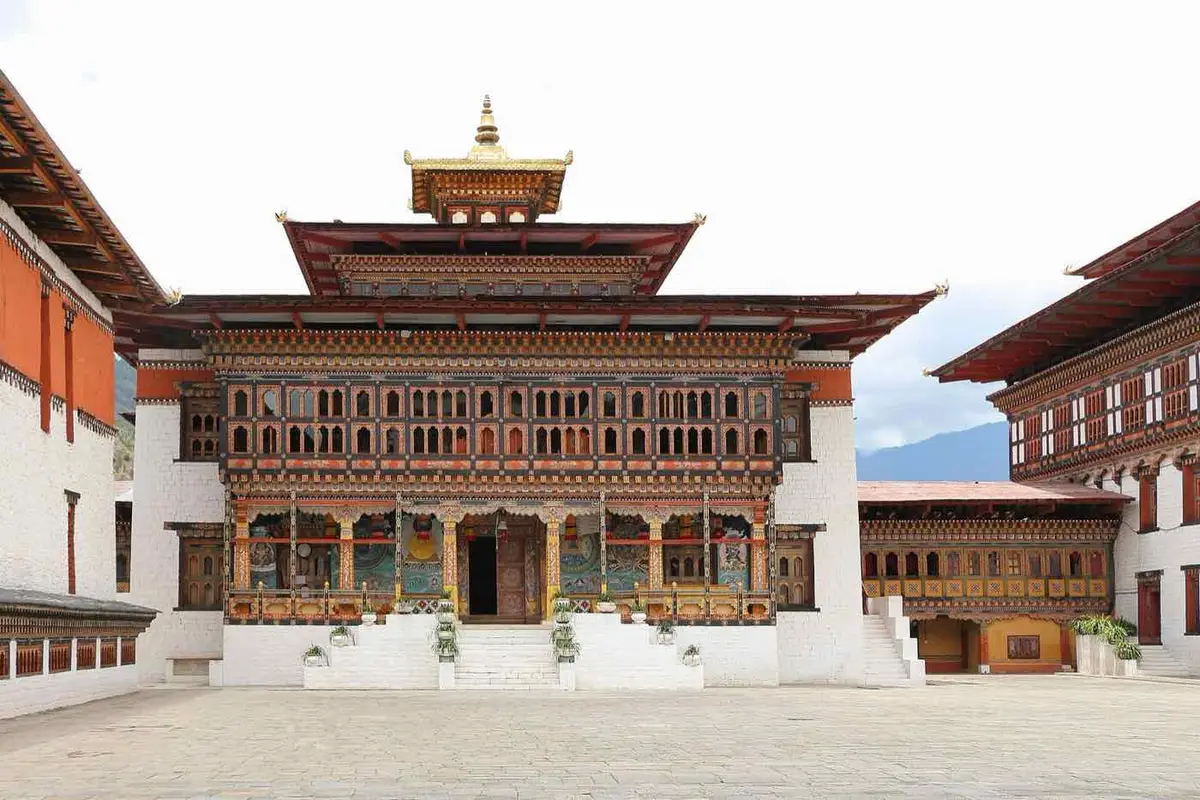
Imagine a stone courtyard packed with families in their brightest gho and kira, the boom of long horns echoing off whitewashed walls, and dancers in painted masks spinning slowly through clouds of incense. That is a Tshechu, Bhutan's great religious festival, and seeing one is among the most remarkable experiences the country offers.
Tshechus are not performances staged for visitors. They are sacred events that bless everyone who attends, and they remain at the heart of community life across the kingdom. Understanding a little of what you are watching makes the experience far richer.
What is a Tshechu?
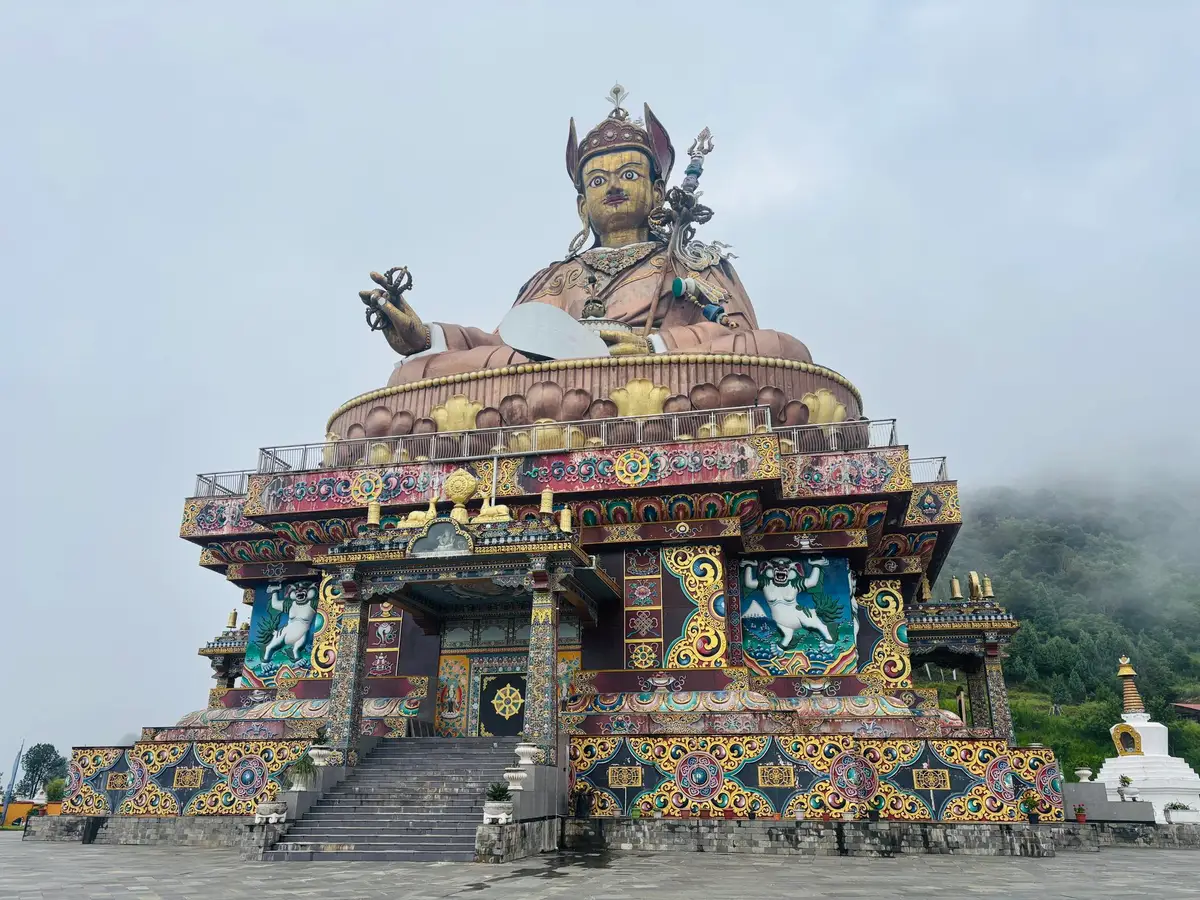
Tshechu means "tenth day". These festivals honour Guru Rinpoche, the eighth-century master who brought Buddhism to Bhutan, and are held on or around the tenth day of a lunar month, a date associated with events in the Guru's life.
Most districts hold an annual Tshechu, usually in the courtyard of the local dzong or a major temple. They typically last several days. For local people, attending is both a religious act and a social occasion: a chance to receive blessings, meet relatives, share picnics and wear their finest clothes.
Why attending matters
Bhutanese tradition holds that watching the sacred dances brings merit and blessing, and helps to cleanse negative actions. Many people believe that seeing the dances prepares the mind for the moment of death, so that the deities will be recognised rather than feared. This is why you will see elderly people watching with deep concentration, prayer beads moving through their fingers.
The cham dances
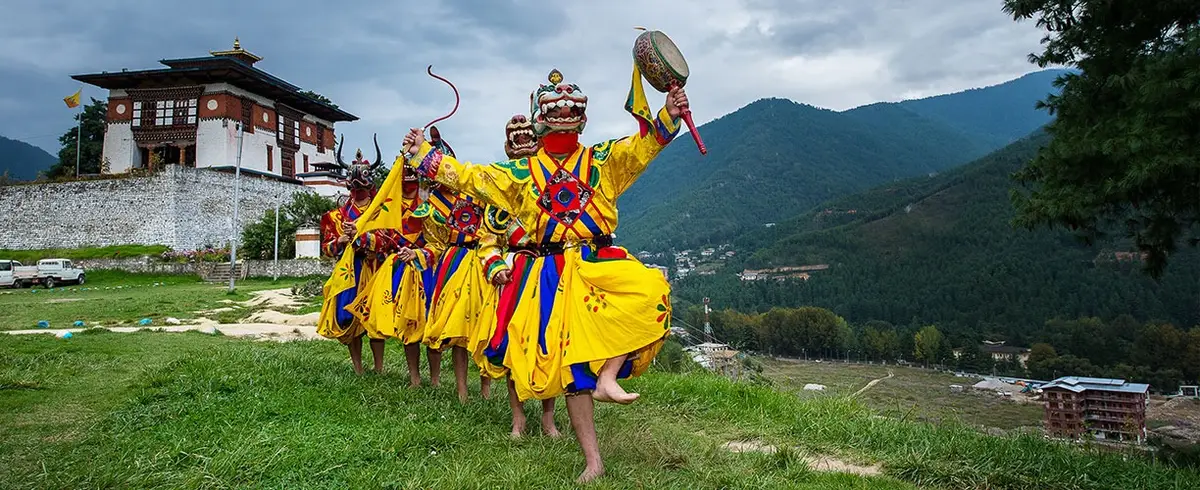
The masked dances, called cham, are the centrepiece of every Tshechu. They are performed by monks and by trained lay dancers, and each dance follows choreography and costume passed down over centuries.
Many dances trace their origins to great figures in Bhutanese history, including the saint and treasure-revealer Pema Lingpa, who is credited with composing several dances still performed today. Each has a meaning, usually drawn from Buddhist teaching.
Common themes include:
- The triumph of good over evil, with wrathful deities subduing harmful forces.
- The eight manifestations of Guru Rinpoche, each shown in a distinct mask and costume.
- The judgement of the dead, in which the deeds of a soul are weighed, reminding the audience of the consequences of their actions.
- Purification of the ground, where dancers consecrate the courtyard before the main rites.
The masks themselves are sacred objects. Fierce faces with bulging eyes and fangs are not demons to be feared; they are protectors, wrathful forms of enlightened beings whose fierceness is directed at obstacles and ignorance.
A tip from our guides: you do not need to understand every dance. Choose one or two to watch closely, ask your guide what they depict, and simply enjoy the rhythm and colour of the rest.
The thongdrel: liberation on sight
At many major Tshechus, a giant appliqué thongdrel is unveiled before dawn on the final day. These huge scrolls, made of silk and stitched by hand, usually depict Guru Rinpoche and his companions, and can cover the entire face of a building.
Thongdrel means "liberation on sight". It is believed that simply seeing the scroll can free a person from negative karma. It is hung in the early hours and rolled up again before direct sunlight falls on it, to protect the delicate fabric.
Watching the thongdrel in the blue light of dawn, surrounded by people murmuring prayers, is unforgettable. At the Paro Tshechu, the great thongdrel is unveiled on the last morning, and it is well worth the early start.
The atsaras: sacred clowns
Wandering through the crowd and between the dancers are the atsaras, masked clowns with red faces and long noses. They tease the audience, mimic the dancers, crack jokes, and sometimes carry wooden phalluses, a symbol of protection and fertility in Bhutan.
Atsaras are much loved, and their humour is part of the festival's purpose. They keep the crowd entertained during long ceremonies, help manage the space, and remind everyone that the sacred and the playful belong together. Traditionally, they also represent the acharyas, or teachers, whose wisdom is wrapped in comedy.
If an atsara singles you out for a joke, smile and play along. It is a blessing of a kind, and the crowd will love you for it.
Festival etiquette
Tshechus welcome visitors, but they are religious events first. A few simple habits make all the difference:
- Dress respectfully. Long sleeves and long trousers or skirts are expected. Many visitors enjoy wearing a gho or kira, which your guide can help arrange.
- Never walk across the dance ground. Move around the edges of the courtyard, even if it takes longer.
- Be thoughtful with cameras. Photography is usually allowed in the courtyard, but avoid flash, do not block local spectators, and never use drones.
- Do not sit on raised platforms reserved for monks, officials or the elderly, unless invited.
- Arrive early. The best spots fill quickly, and locals often spread mats and settle in for the whole day.
- Follow your guide's lead on where to stand and when to move.
The main festivals and when they fall
Because Tshechus follow the Bhutanese lunar calendar, their dates on the Western calendar change every year. Always check exact dates before booking flights. Our festival calendar is a good starting point.
Some of the best-known festivals include:
- Punakha Drubchen and Tshechu (usually February or March). The Drubchen features a dramatic re-enactment of a seventeenth-century battle, followed by the Tshechu at Punakha Dzong.
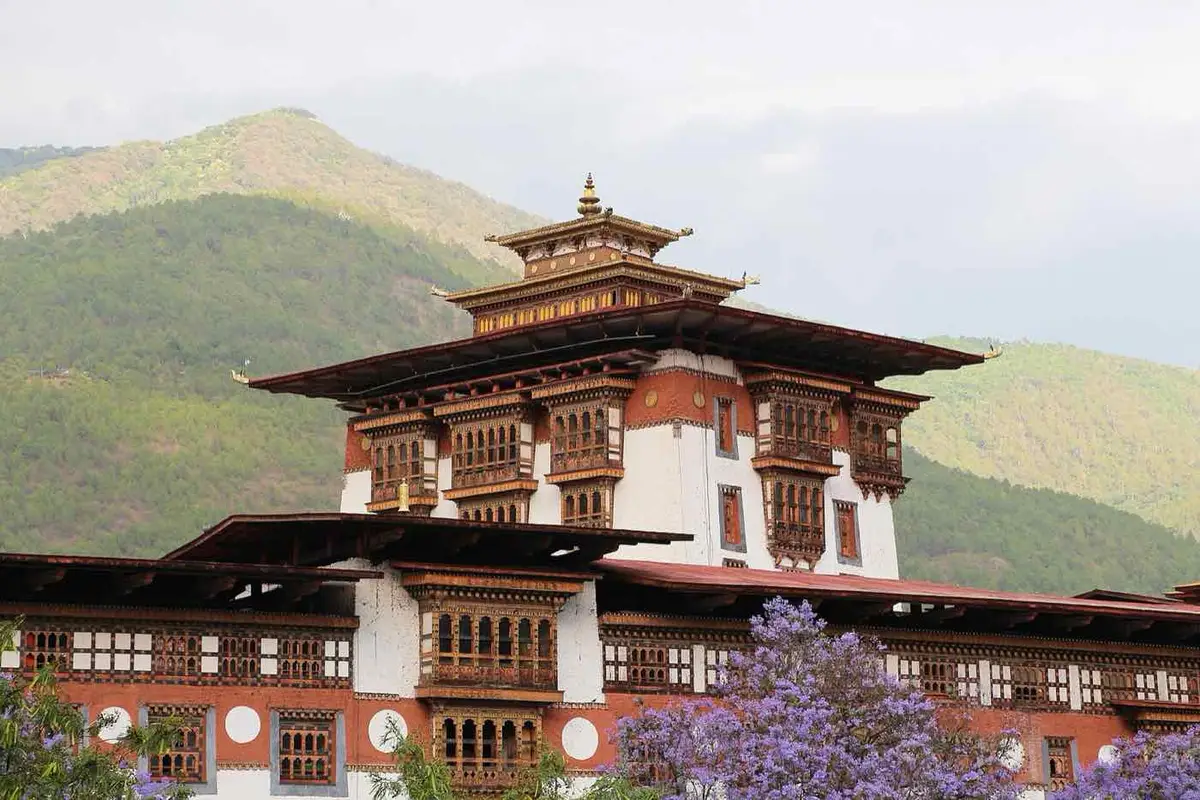
- Paro Tshechu (usually March or April). One of the largest festivals, held at Rinpung Dzong, ending with the dawn thongdrel.
- Thimphu Tshechu (usually September or October). Held at Tashichho Dzong in the capital, drawing huge crowds from across the country. See our Thimphu Tshechu journey.
- Jambay Lhakhang Drup, Bumthang (usually October or November). Famous for its night-time fire blessing, mewang, when people pass under a burning gateway to be cleansed. Our Bumthang fire dance journey is built around it.
- Black-Necked Crane Festival, Phobjikha (11 November). A newer, community festival celebrating the cranes' return, with dances performed by local schoolchildren.
Smaller village festivals take place throughout the year and can be wonderfully intimate, with far fewer visitors.
Planning tips
- Book early. Hotels in Paro and Thimphu fill months ahead for the main Tshechus.
- Plan around lunar dates. Confirm the year's dates before fixing flights, as they shift annually.
- Balance busy and quiet. Pair a big festival with a smaller one or with time in the countryside.
- Pack a cushion and sun protection. You may sit for hours on stone steps, often in strong mountain sun.
- Bring a scarf for dzong visits if you are not wearing national dress; your guide will advise on what is appropriate.
- Learn the story first. A little reading the evening before lets each dance unfold with meaning.
Joining the celebration
A Tshechu is Bhutan at its most joyful and most devout at once: monks and clowns, prayers and picnics, ancient masks and children giggling in the crowd. Come with curiosity and respect, and you will not just watch the festival but feel yourself, for a few hours, part of it.